Economy
Tarique Rahman urges party men to gain people’s trust, love


Bangladesh Nationalist Party (BNP) Acting Chairman Tarique Rahman today called upon the party men to stay with the people and achieve their trust and love through their respective works.
“The country will go on an election roadmap following the path of reform activities. So, let us achieve the people’s trust and love. Stay with the people and keep them with us,” he said.
Tarique made the call while virtually addressing a public rally as the chief guest in front of BNP’s Nayapaltan central office in the capital marking the International Day of Democracy.
Party’s Secretary General Mirza Fakhrul Islam Alamgir chaired the rally.
The BNP acting chairman reiterated that changeover of power doesn’t mean only handover of state power; rather it means qualitative change in the state and the country’s politics.
“Every political leader and activist should keep in mind that qualitative change of a political party’s leaders and activists is needed for qualitative change of politics,” he said.
Tarique Rahman urged the party men to prepare themselves to lead a knowledge-based state and society without being confused in any provocation or persuasion.
Tens of thousands of leaders and workers joined the massive gathering. BNP shifted the date of the rally today from Sunday last due to inclement weather.
Recalling the sacrifice of the martyrs to free the country from
autocratic rule, the BNP acting chairman said a huge number of people spontaneously joined the rally on the street.
The pro-Bangladeshi force may have to make more sacrifices to build a discrimination free Bangladesh as cherished by the students-people, he said.
“We have more paths to go. But this path won’t be of terrorism, conflict, revenge or vengeance rather of patience, tolerance and understanding,” the BNP acting chairman said.
Tarique Rahman said the government which is formed through a mass uprising in Bangladesh or any other country must be considered as the government of the people.
So, the people continued supporting the interim government and it will do so in the days to come as well, he hoped.
But at one stage, accountability of the interim government is also ensured through an elected parliament, he mentioned.
So, the foremost and prime target of all the reform activities of the government should be establishing an elected parliament and government through ensuring people’s political empowerment, said the BNP acting chairman.
He urged the government to prioritize the reform programme with the aim of establishing an accountable government and parliament formed with elected representatives by people’s votes.
Tarique Rahman said development, democracy or reforms cannot be sustainable and effective without the political empowerment of the people and without the engagement of people in reform activities.
People’s political empowerment can be ensured through establishing people’s voting rights by holding a free, fair and neutral election, he said.
Tarique Rahman called upon the government to take priority based measures for the reformation of the Election Commission and public administration as well as building law enforcement agencies as efficient forces.
Noting that the interim government has already taken some reform initiatives, the BNP acting chairman said if the interim government cannot fix priorities in view of agenda setting, the clique of conspirators can take various advantages to frustrate the success of the mass upsurge.
Evidences of such conspiracies have already become visible, he added.
Tarique Rahman said the manner of this mass uprising is different from any other previous mass-uprising as the people were confined into the shackle of subjugation losing all democratic and human rights during the illegal regime of the ousted autocrat.
The country was also on the verge of losing its independence and sovereignty, he added.
So, this mass uprising not only established the people’s rights but also protected the country’s independence and sovereignty, Tarique Rahman said.
The BNP acting chairman said the country and its people is now freed from the fears of enforced disappearance, killings, abduction and terrible “Aynaghar”
Now the first task should be establishing the people’s democratic, political and voting rights, he said.
Currently, around 12.5 crore voters are enlisted and around 2.5 crore new voters were included in the voter’s list, he mentioned.
But this 2.5 crore voters of the new generation couldn’t exercise their voting rights in any national election, Tarique Rahman said.
Neither they could elect their cherished public representative nor they get the scope to be public representative by contesting elections, he said.
Noting that half of the total population is women and a large section of society is youth, Tarique Rahman said it is not possible to build a discrimination free humane state keeping this large section of society beyond political engagement.
Unless the political and economic empowerment of people and people’s participation in reform activities can be ensured, reform activities won’t bring any effective results, he mentioned.
As part of state-politics, BNP acting chairman said the BNP had announced a 31-point agenda in 2023 in the presence of representatives of different democratic political parties in Bangladesh, but his party always welcomes the proposal of bringing all necessary changes and modifications in reform agenda.
Terming the ongoing reform process in politics as a continuous process in all sectors of the state, Tarique Rahman said public uprising or reform program is a normal and acceptable practice to democratic politics, where everyone is eligible to express his or her personal opinions, if necessary.
For this reason, he said the BNP has repeatedly emphasized on establishing the right of the people’s voting rights. “BNP believes that the people direct-partnership with the state-politics and political establishment is created to ensure a free, fair and credible general election,” he added.
Evaluating the people’s verdict in the politics, this BNP leader said, “Juas criminal offenses are tried in judicial courts…political activities or political behaviors are tried in people’s courts.”
Greeting the democracy-loving people of Bangladesh on the ‘International Democracy Day’, Tarique Rahman, on behalf of BNP, said the brave students, women, children, farmers and workers of all walks of life have shown the world that the people of Bangladesh are willing to let their chests in front of the gun-point against any dictatorship or misrule.
He said the country’s democracy-loving people would forever remember those with due respect, who made their supreme sacrifices, received serious injuries by losing their hands, feet and eyes or were permanently crippled, in the recent movement to establish democracy.
“The state must fulfill its responsibility towards every family of the victims,” Tarique hoped.
Acting BNP chairman said people’s hard-earned democratic government and its administration was supposed to be the government of the people, by the people and for the people; but in last 15 years mafia rule and sole dictatorship had
been introduced in Bangladesh, turning the state into the government of the mafia, by the mafia and for the mafia.
He said this mafia gang made the country fragile in all areas, turning the country into a totally import-dependent, debt-dependent and sub-dependent state as well.
“The vested quarter has bankrupted the country’s banks. More than Taka about 17 lakh crore were siphoned off in the last decade and a half,” the senior BNP leader alleged.
The mafia cycle, he said, has not only made the country financially fragile, it has also destroyed the socio-economic, cultural and political norms of the country, where country’s constitutional and statutory institutions were rendered ineffective.
“Fascism itself was turned into a prison of justice across the country,” Tarique Rahman mentioned, adding that due to the reckless corruption and looting of the deposed dictatorship, the foreign debt of Bangladesh has exceeded US $100 billion.
He said the child who is born in Bangladesh today has no reason with Taka 1.50 lakh debt each.
This vested circle has completely upset the country’s law and order forces while using them for their narrow party interests, he added.
Tarique Rahman said the fallen dictatorship was the main barrier to the building a democratic-humanitarian Bangladesh. But the 15-year tyranny and misrule were not removed fully till date as the beneficiaries of the circle still being continued to challenge the incumbent interim government from within the administration or under the guise of politics as well.
The interim government, he said, is working to establish a democratic government accountable to the people aimed to establishing the people’s voting right in Bangladesh.
Tarique Rahman said some activities of this government may not be considered as a success by everyone, but the failure of this government will be the failure of all of us.
“So this government cannot be allowed to fail in any way. The people will not allow the interim government to fail despite various provocations from the country and abroad. However, they also must be careful that this government does not become the cause of its own failure,” BNP acting chairman stated.
Earlier, the meeting started after 2.30 pm with recitation from the Holy Quran, where thousands of BNP leaders and workers thronged at city’s Nayapaltan area to joined the rally since morning.
BNP standing committee members and central leaders also addressed the rally.



The International Monetary Fund (IMF) has urged Bangladesh to maintain a tight monetary policy to contain inflation, while stressing that monetary tightening alone will not be enough to restore economic stability.
Inflation in Bangladesh rose to 8 per cent in September, according to the IMF. The Washington-based lender has called for broader reforms in the financial sector, stronger revenue mobilisation and improvements in overall economic management to address the country’s persistent economic challenges.
Sonali Jain-Chandra, deputy director of the IMF’s Asia and Pacific Department, made the remarks in response to a question at a news conference on the economic outlook for Asia and the Pacific, held on the sidelines of the IMF and World Bank Group annual meetings in Bangkok, Thailand.
Asked whether tight monetary policy alone would be sufficient to tackle inflationary pressures that have persisted for more than three and a half years, Jain-Chandra said maintaining a restrictive monetary stance was important, but needed to be accompanied by other reforms.
Bangladesh is currently facing challenges in three key areas: revenue mobilisation, the financial sector and inflation, she said.
The IMF also expressed concern over the fragile state of Bangladesh’s financial sector, saying a credible reform strategy was needed to strengthen the sector’s capacity and ensure stability.
The fund also highlighted the country’s persistently weak revenue collection. Bangladesh’s tax-to-GDP ratio has declined over time and currently stands at around 7 per cent, placing it among the lowest in the world, according to the IMF.
The IMF stressed the need for a coordinated effort to increase revenue collection, saying higher government revenues were essential to finance development expenditure and strengthen the financial sector.
It called for necessary reforms to the revenue system and effective measures to improve the government’s capacity to generate income.
Talks Under Way on New IMF Programme
Meanwhile, discussions are continuing on a potential new lending programme for Bangladesh.
Jain-Chandra said Bangladeshi authorities approached the IMF in May for support under a new programme after deciding not to draw further instalments under the previous arrangement.
In response to the request, an IMF mission visited Dhaka in July to discuss various aspects of Bangladesh’s economic reform agenda.
According to Jain-Chandra, the reform issues discussed during the visit were closely aligned with the recommendations outlined in the IMF’s Article IV consultation for Bangladesh earlier this year.
The IMF has remained in regular contact with Bangladeshi authorities since the July visit, she said.
Jain-Chandra added that the fund remained closely engaged with the authorities and was ready to support Bangladesh in initiating the reforms needed to address its economic challenges.
The International Monetary Fund (IMF) has projected that Bangladesh’s gross domestic product (GDP) will grow by 3.2 per cent in the 2026-27 fiscal year, while average inflation could rise to 10.9 per cent, signalling mounting pressure on the country’s economy.
The projections were outlined in the IMF’s World Economic Outlook (WEO) report, released on Tuesday.
The latest growth forecast marks a significant downward revision from the 4.3 per cent projected by the IMF in April. The fund had subsequently forecast growth of 3.5 per cent in July before lowering its estimate further to 3.2 per cent.
The IMF has also sharply revised its inflation outlook for Bangladesh. In April, it projected average inflation of 6 per cent for the 2026-27 fiscal year. The latest estimate raises that figure to 10.9 per cent.
The combination of slower economic growth and persistently high inflation points to continued pressure on Bangladesh’s macroeconomic stability.
Bangladesh growth outlook trails other forecasts
The IMF’s latest growth projection for Bangladesh is lower than those of other major international development institutions.
The World Bank has forecast GDP growth of 3.4 per cent for Bangladesh in the 2026-27 fiscal year, while the Asian Development Bank (ADB) has projected growth of 4 per cent.
According to the IMF, Bangladesh’s economy grew by 3.6 per cent in the 2025-26 fiscal year, following growth of 3.5 per cent in the preceding fiscal year.
India, Bhutan expected to grow faster
The IMF has projected stronger economic growth in neighbouring countries, with India’s economy expected to expand by 7 per cent and Bhutan’s by 6.9 per cent in the relevant fiscal year.
The contrasting forecasts highlight the challenges facing Bangladesh as it seeks to restore economic momentum while tackling persistent inflation.
The IMF’s latest projections come as the annual meetings of the IMF and the World Bank Group are underway in Bangkok, Thailand.
Bangladesh’s economic situation, reform programmes and efforts to secure financing from development partners are among the key issues receiving attention during the meetings.
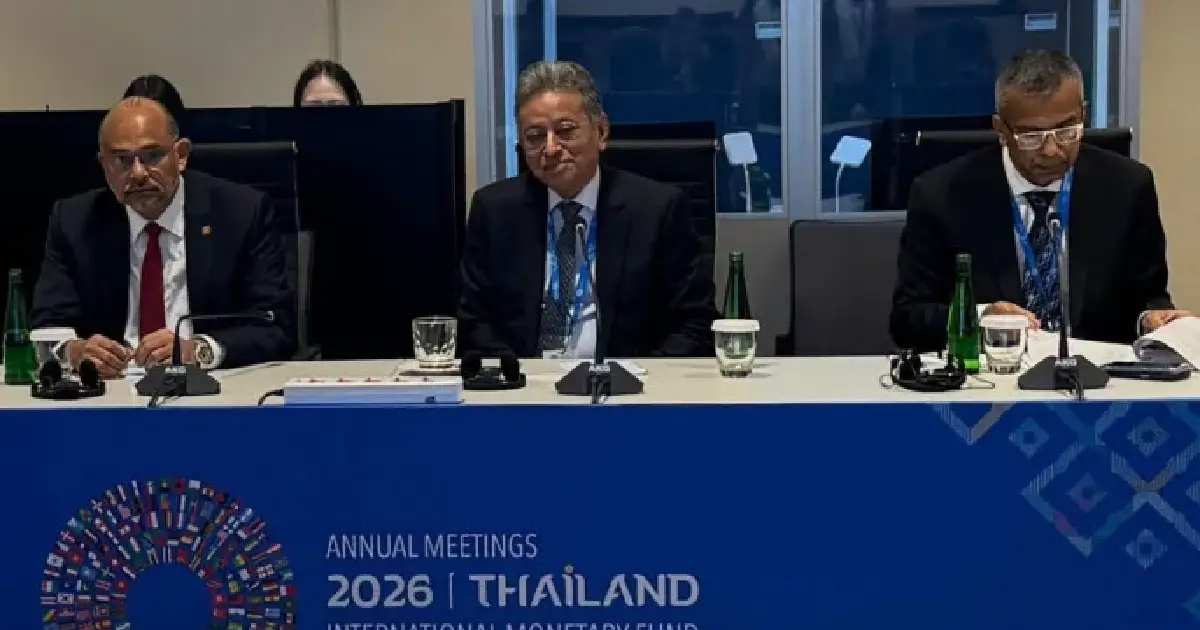
The World Bank supports the Bangladesh government’s policies to address the country’s current economic challenges, restore stability and implement medium- and long-term development plans, Finance Minister Amir Khasru Mahmud Chowdhury said on Tuesday.
He said the global lender was broadly aligned with Bangladesh’s economic programmes and policy priorities and would continue to support the country’s economic recovery and future development.
The finance minister made the remarks while speaking to journalists after a meeting with a World Bank managing director in Bangkok, Thailand, on October 13.
Amir Khasru said Bangladesh’s economy was facing significant challenges when the current government took office. Alongside dealing with the financial and economic burdens inherited from the previous period, the country was also having to navigate global economic disruptions caused by ongoing wars and geopolitical tensions.
He said the World Bank understood the realities facing Bangladesh and supported the government’s policy approach to overcoming the economic difficulties.
“The World Bank is aligned with the programmes and policy direction we have set to restore economic stability and ensure future development,” the minister said, adding that both sides would continue working together.
He said the World Bank was willing and prepared to provide the assistance Bangladesh needed.
No decision yet on proposed $10 billion in additional assistance
Clarifying reports that Bangladesh had sought an additional $10 billion in assistance from the World Bank, the finance minister said no final decision had been made.
He said discussions with the lender were ongoing and that possible proposals would be reviewed in light of those discussions. The process could take several months to complete, he added.
“No decision is being made at this stage. I have seen several inaccurate reports here and there. This is a discussion, and there will be follow-up based on these talks. It is a process that will continue over the next few months,” he said.
The minister stressed that the ongoing discussions should not be interpreted as a final agreement. Rather, they were intended to establish a basis for determining the next steps and considering possible decisions.
Further discussions would also take place in Dhaka, he said.
Expressing satisfaction with the progress of the talks, Amir Khasru said Bangladesh was in a favourable position to establish a framework for future cooperation.
He reiterated that the government’s economic policies, programmes and medium- and long-term development plans were broadly aligned with the World Bank’s position.
Government’s economic agenda aligned with BNP manifesto
The finance minister also said the World Bank’s position was consistent with the government’s economic plans and the Bangladesh Nationalist Party’s (BNP) election manifesto.
He said discussions were underway on how to address the country’s economic challenges and achieve the government’s development objectives.
According to the minister, the government has submitted a written proposal outlining a framework for partnership with the World Bank. Discussions on the proposed framework will continue.
He said the World Bank had provided various recommendations and suggestions, while Bangladesh had also presented its own proposals and recommendations.
Further discussions would be based on these submissions, he added.
Government optimistic about inflation and GDP targets
Asked about forecasts by the World Bank and the Asian Development Bank (ADB) on inflation and gross domestic product (GDP) growth, and how they compared with the government’s targets, the finance minister said the government did not intend to dispute the projections made by other institutions.
He said the institutions had prepared their forecasts based on their own calculations and analyses, adding that the country’s economic performance would become clearer as progress on key indicators was assessed over time.
“We do not want to dispute anyone’s projections. They have made their estimates based on their own calculations. We are carrying out our work, and they are doing theirs. What matters most is that the cooperation we need continues,” he said.
The minister expressed optimism that the government would be able to meet the inflation targets set out in the national budget.
He said the government was working to restore economic stability through continued engagement with the World Bank, implementation of its economic policies and progress on medium- and long-term development plans.