Economy
PM Modi not expected to meet Bangladesh’s Yunus on UN General Assembly sidelines

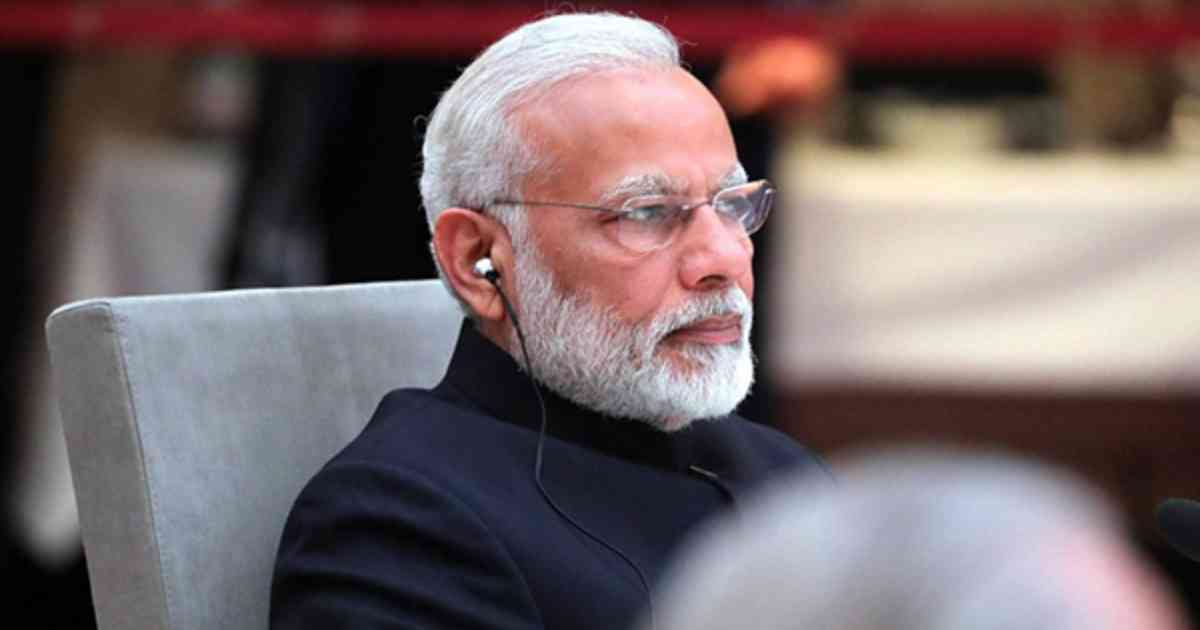
Prime Minister Narendra Modi is not expected to meet Bangladesh interim government chief Muhammad Yunus on the margins of the United Nations General Assembly next week, people familiar with the matter said on Wednesday.
Earlier this month, the Bangladesh side made a formal request for a meeting on the sidelines of the General Assembly, which both leaders are set to attend. Dhaka was keen on a meeting in the hope it would help clear the air over irritants that have emerged in bilateral ties since the fall of the Sheikh Hasina government, the people said on condition of anonymity.
The people said such a meeting is not part of the Indian side’s agenda. Besides, Modi will have a packed schedule for his three-day visit to the US, as he is set to attend the Quad Leaders’ Summit in Wilmington, Delaware, on September 21 and address the Summit of the Future at the UN General Assembly on September 23.
“The PM is expected to have some bilateral meetings on the sidelines of the General Assembly in New York but a meeting with the head of Bangladesh’s interim government isn’t on the schedule,” one of the people cited above said.
Besides scheduling issues, comments by Yunus on India-Bangladesh relations in a recent interview and near-daily remarks by members of the interim government in Dhaka perceived as critical of India have not gone down well in New Delhi.
In the interview, Yunus criticised former premier Sheikh Hasina for commenting on developments in Bangladesh while in exile in India. He suggested Bangladesh could seek her extradition and said India should move beyond the “narrative” that every political party other than Hasina’s Awami League is “Islamist”.
Other members of the interim government, including de facto foreign minister Touhid Hossain, have repeatedly raked up the possibility of seeking the extradition of Hasina, who fled to India after stepping down on August 5. Hossain also acknowledged any such move would create an “embarrassing situation for the Indian government”.
India’s leadership has said Hasina was granted approval to come to the country at short notice. Hasina has been largely incommunicado while in India, where she is at an undisclosed safe location. The external affairs ministry has refused to be drawn out on any possible Bangladeshi request for her extradition, describing it as a hypothetical matter.
The people cited above said a meeting between Modi and former US president Donald Trump too was not part of the Indian side’s agenda though an encounter between the two leaders in New York could not be ruled out.
Trump said at a campaign event in Flint, Michigan, on Tuesday that he will meet Modi next week but gave no details on where the meeting would be held. Trump also said India was a “very big abuser” of the US-India trade relationship. Some other world leaders who visited the US in recent months for meetings with President Joe Biden and other multilateral events have met Trump as well.


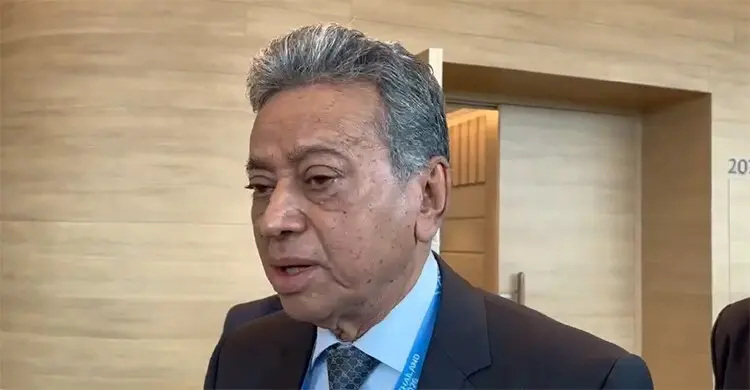
Bangladesh has sought financial assistance from the World Bank to help meet rising energy costs amid global economic uncertainty, Finance Minister Amir Khasru Mahmud Chowdhury said on Monday.
Speaking to reporters in Bangkok on the sidelines of the 2026 Annual Meetings of the International Monetary Fund (IMF) and the World Bank Group, the minister said discussions with the World Bank were underway on possible financial support. Work was also progressing on a proposed framework agreement between the two sides, he added.
The minister expressed hope that the World Bank would continue to support Bangladesh as the country navigates mounting economic challenges.
He said global instability had increased the financial burden on Bangladesh’s energy sector, making additional support important to help manage the rising costs. According to the minister, the World Bank had responded positively to discussions on possible assistance.
Bangladesh’s engagement with the lender should go beyond existing funding arrangements and ongoing development projects, he said, stressing the need for broader cooperation to address the economic pressures arising from global uncertainty and higher energy expenditure.
Framework Agreement Under Discussion
Bangladesh and the World Bank are also working towards a framework agreement to strengthen their partnership, the minister said.
Discussions and related procedural work are continuing, with further steps dependent on progress in negotiations and agreement between the two sides.
The minister also emphasised the need to align development initiatives supported by international partners with the government’s election manifesto and national development priorities.
He said coordination between government policies and external assistance would be important in advancing Bangladesh’s economic objectives.
Bangladesh’s IMF Engagement Also in Focus
The possibility of a new lending programme with the IMF is another issue of interest for Bangladesh during the annual meetings, scheduled for October 12-18.
The meetings bring together finance ministers, central bank governors and senior officials from international financial institutions to discuss global economic developments, financing needs and development priorities.
For Bangladesh, a potential new IMF programme could provide additional external financing and support efforts to maintain macroeconomic stability. However, the size, terms and timeline of any new arrangement have not been formally confirmed.
Rising Global Costs Put Pressure on Bangladesh
Geopolitical tensions, volatile energy markets, inflation and higher borrowing costs continue to pose challenges for economies worldwide, particularly those heavily dependent on imports.
For Bangladesh, higher energy import bills can increase pressure on foreign exchange reserves and complicate government expenditure planning.
While financing from international development partners could help ease some of these pressures, sustained economic stability also depends on stronger revenue collection, improvements in the banking sector, more efficient public spending and a business environment conducive to investment.
Bangladesh’s participation in the annual meetings is therefore focused not only on securing financial assistance but also on strengthening development partnerships and exploring ways to address immediate economic pressures while pursuing longer-term development goals.
The outcome of the discussions with the World Bank, along with any progress towards a new IMF lending arrangement, will be important in determining the extent of additional external support available to Bangladesh.

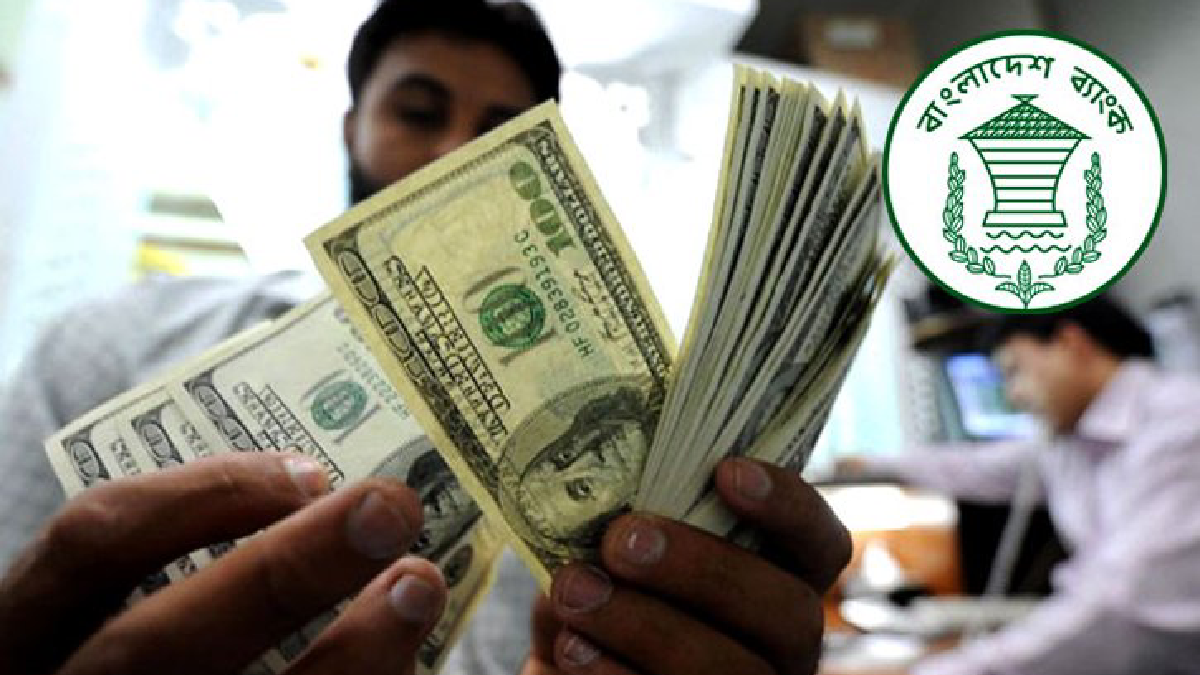
Expatriate Bangladeshis sent approximately US$ 2.11 billion in remittances during the first 28 days of September in the fiscal year 2024-25, according to data released by Bangladesh Bank on 29 September.
Of this total, state-owned and specialised banks handled $679.10 million, while private banks received $1.43 billion in remittances.
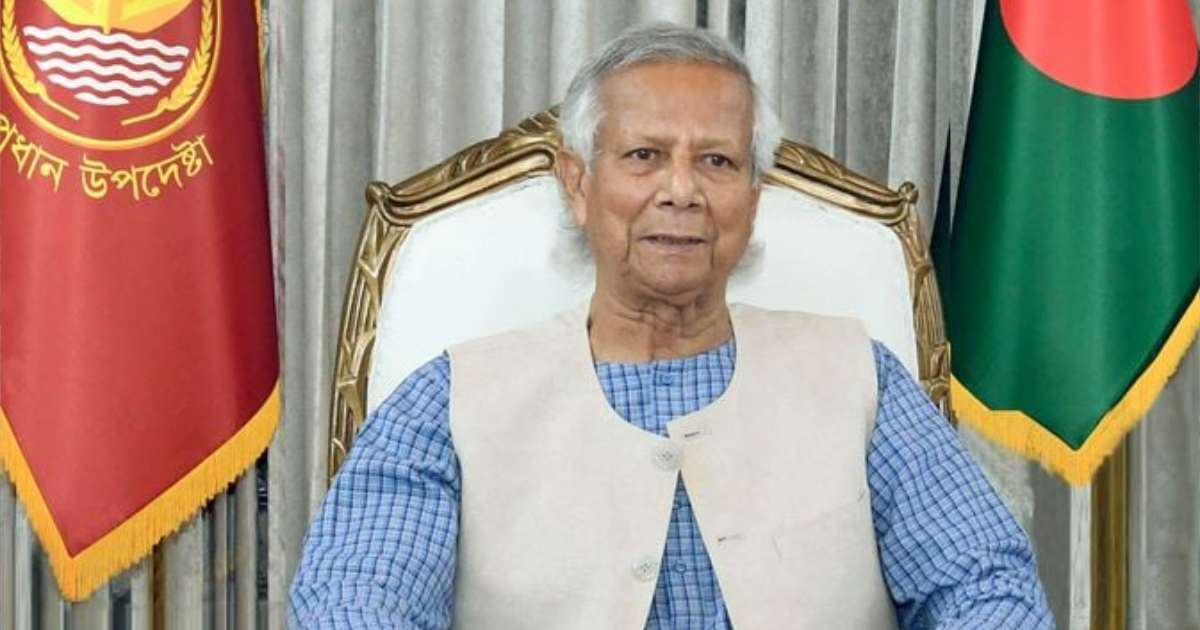
Chief Adviser to Bangladesh’s interim government, Professor Muhammad Yunus, has vowed to expedite reforms and hold elections swiftly. Yunus, who recently assumed the role after the collapse of Prime Minister Sheikh Hasina’s 15-year administration, expressed his commitment during an interview with Tokyo-based news outlet NHK WORLD in New York on Sunday. He was attending the United Nations General Assembly at the time.
Following mass student-led protests that ended Hasina’s long-standing rule in August, Yunus stepped in as the leader of the caretaker government. Known for founding Grameen Bank, an institution providing microloans to the underprivileged, Yunus, along with the bank, earned the Nobel Peace Prize in 2006 for his efforts in poverty alleviation.
During the interview, Yunus emphasized that the interim government’s primary mission is to implement reforms promptly and ensure elections are held as soon as the groundwork is complete. He underscored the importance of success, stating, “Failure is not something that we can accept.”
Addressing the pivotal role of students in the ousting of the Hasina administration, Yunus acknowledged the sacrifices made by young people, referring to their involvement as part of a “revolution.” He highlighted his intention to engage the younger generation in shaping policy.
Furthermore, Yunus called for continued support from Japan, Bangladesh’s largest donor, during this crucial transition period. He stressed that Japan’s assistance is vital to stabilizing Bangladesh’s economy and fostering a democratic foundation in the nation.