Corporate
BD among the top 3 countries for active users’ growth on Facebook


Bangladesh is among the top 3 countries contributing to active users growth for Facebook as of December 31, last year, social media major Meta said in a regulatory filing.
“Users in India, the Philippines and Bangladesh represented the top three sources of growth in DAUs during December 2022, relative to the same period in 2021,” Meta said.
The company has reported a 4 percent increase in worldwide daily active users (DAUs) to two billion on average during December 2022 from 1.93 billion during December 2021.
The company reiterated the risk to its operation in India due to the proposed data protection framework.
The company defines a daily active user as a registered and logged-in Facebook user who visited Facebook through its website or a mobile device, or used the Messenger application (and is also a registered Facebook user), on a given day.
The monthly active users (MAUs) as of December 31, 2022, increased by 2 percent to 2.96 billion from December 31, 2021.
India stood among the top three contributors in terms of monthly active users too.
“Users in India, Nigeria, and Bangladesh represented the top three sources of growth in 2022, relative to the same period in 2021,” Meta said.
The company reiterated the risk to its operation in India due to the proposed data protection legal framework in India.
“In addition, some countries, such as India and Turkey, are considering or have passed legislation implementing data protection requirements or requiring local storage and processing of data or similar requirements that could increase the cost and complexity of delivering our services, cause us to cease the offering of our products and services in certain countries, or result in fines or other penalties,” the filing dated February 1 said.
Meta has also cautioned investors that it could also face fines, orders restricting or blocking services in particular geographies, or other government-imposed remedies as a result of content hosted on its services citing examples of India and Germany.
“For example, legislation in Germany and India has resulted in the past, and may result in the future, in the imposition of fines or other penalties for failure to comply with certain content removal, law enforcement cooperation, and disclosure obligations,” the filing said.

Corporate
Chinese, South Korean Youth Explore Green Development and Technological Innovation in Jiangxi
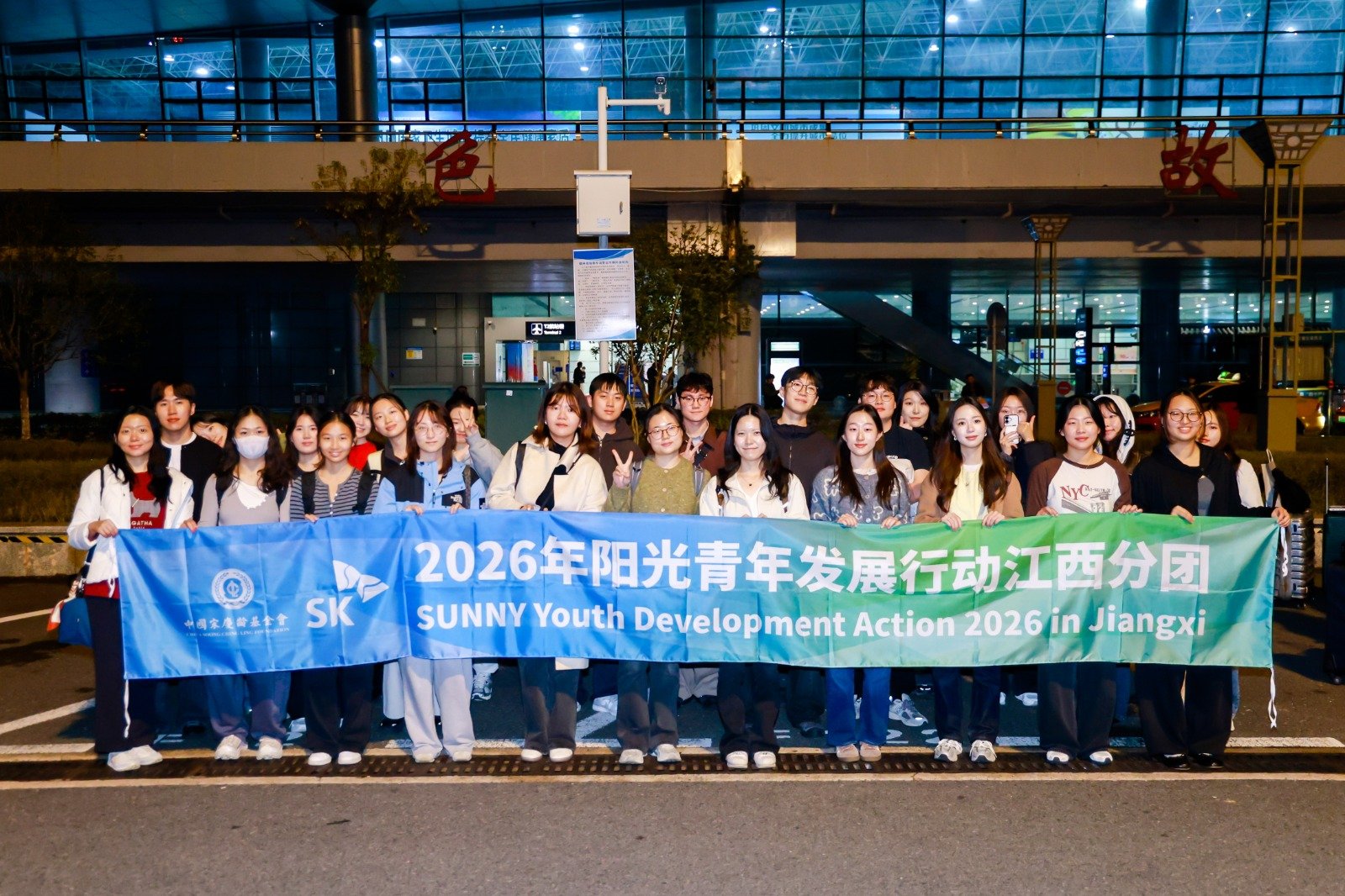
China Correspondent: Fifty young representatives from China and South Korea participated in a youth exchange programme in China’s Jiangxi Province, exploring sustainable development, environmental protection, technological innovation and cultural heritage while strengthening friendship and mutual understanding between the two countries.
The Jiangxi segment of the 2026 SUNNY Youth Development Action programme, jointly organised by the China Soong Ching Ling Foundation and South Korea’s SK Group, concluded with a closing ceremony in Nanchang, the provincial capital of Jiangxi.
Under the theme “Empowering Youth through Technology,” the programme brought together young participants from both countries to explore Jiangxi’s achievements in green development, modern agriculture, industrial transformation, technological innovation and cultural preservation through field visits, academic exchanges, volunteer activities and interactive experiences.
During the programme, participants visited Ganzhou and Nanchang, gaining firsthand insights into how technological innovation and ecological conservation are contributing to China’s regional economic and social development.
In Ganzhou, the young delegates visited the Gannan Navel Orange Industrial Park, where they learned about modern agricultural production, processing, and industrial development and participated in volunteer activities. They also visited the Xinfeng Cultural Centre, experiencing traditional Hakka culture and intangible cultural heritage.
In Shangyou County, participants explored local food-processing enterprises, the Ecological Pickleball Sports Centre and Yangmingbao Ecological Park, gaining insights into the integrated development of ecological conservation, sports, tourism and local industries.
At Nanchang University, the delegates attended a special lecture on technological innovation, delivered group presentations and exchanged ideas with university students on technology, sustainable development and social responsibility.
The participants also visited Jiangxi Flight University, where they learned about the province’s aviation and drone industries and participated in flight simulation and drone operation activities. They explored the development of electric vehicles and intelligent manufacturing at Jiangling Group’s new energy vehicle company and experienced virtual reality technologies at Nanchang’s VR industry base.
The programme also featured visits to the Jiangxi Provincial Museum, Tengwang Pavilion, Wanshou Palace Historical and Cultural District and a modern tea production facility, providing participants with opportunities to appreciate China’s rich history, traditional tea culture and cultural heritage.
Speaking at the closing ceremony, Jiangxi Vice Governor Xia Wenyong emphasised the important role of young people in strengthening people-to-people friendship. He encouraged Chinese and South Korean youth to deepen cultural exchanges, promote ecological conservation and explore cooperation in green technology and digital innovation.
Zhang Jiming, vice chairman of the China Soong Ching Ling Foundation, highlighted the importance of establishing more international youth exchange platforms and encouraging young people to translate their knowledge and ideas into practical action.
Launched in 2025, the SUNNY Youth Development Action programme aims to promote international youth exchanges, talent development, volunteer services and sustainable social development.
The 2026 programme brought together 150 young representatives from China and South Korea through three regional programmes in Yunnan, Sichuan and Jiangxi provinces, focusing on green development, water resource conservation, biodiversity protection, renewable energy and technological innovation.
Through shared experiences, academic discussions and practical activities, the initiative provided a platform for young people to overcome cultural and linguistic barriers, build lasting friendships and explore collaborative solutions to common development challenges.
The programme also demonstrated how international youth exchanges can contribute to sustainable development, technological cooperation and stronger people-to-people relations across Asia.
Corporate
Bangladeshi Enterprise G4Next Ventures Participates in International Trade and Investment Conference in China
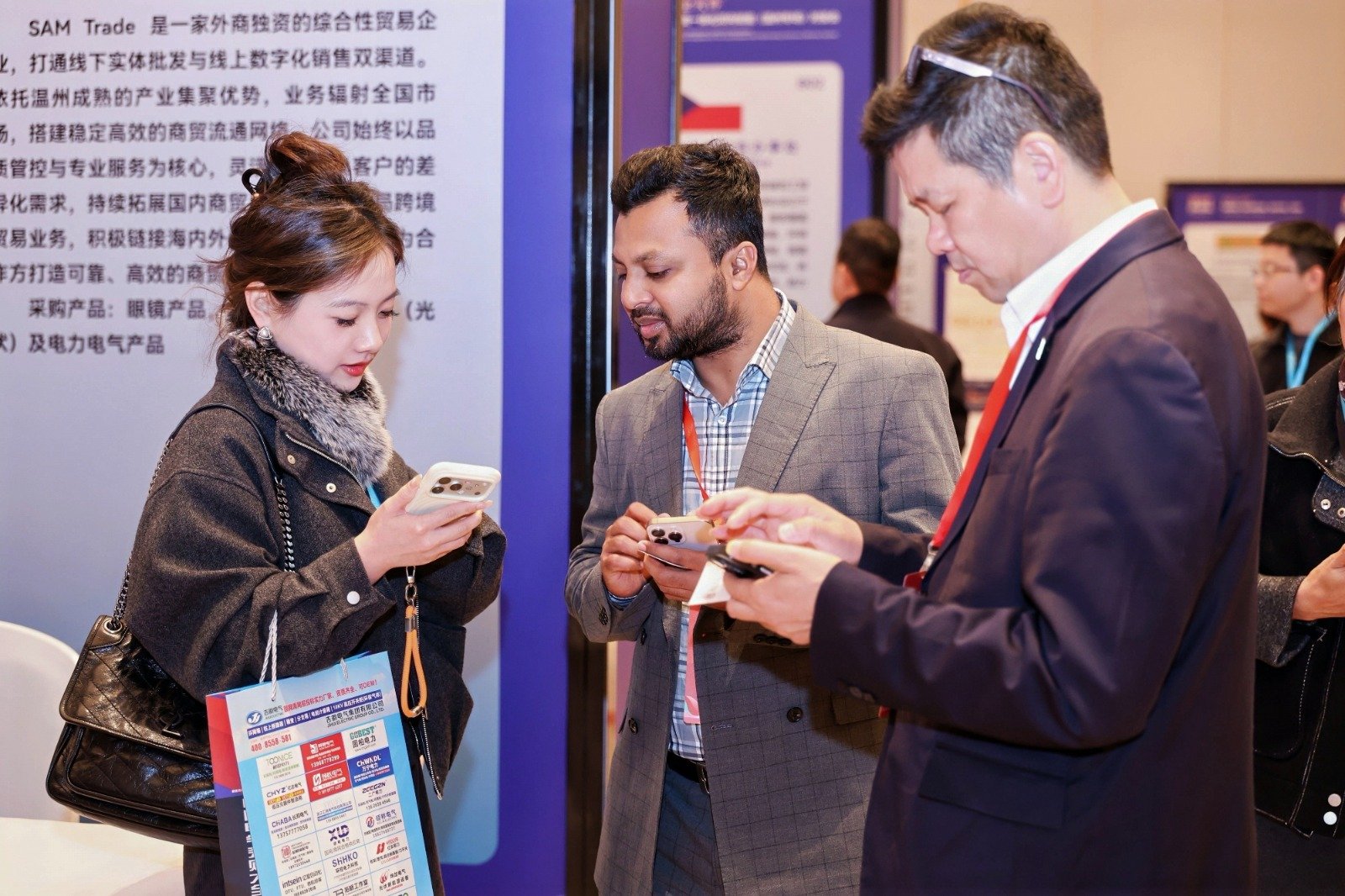
China Correspondent: Bangladeshi trading enterprise G4Next Ventures, led by its Chief Executive Officer (CEO) Mohammad Saiyedul Islam, participated in an international trade and investment matchmaking conference held in Wenzhou, Zhejiang Province, China, on November 19-21, aiming to explore new business opportunities and strengthen trade and investment cooperation between Bangladesh and China.
The conference, titled “Trade and Investment Integration for Two-way Empowerment Matchmaking Conference (Wenzhou Session),” brought together government officials, diplomats, business leaders, financial institutions, industry associations, and international enterprises to promote cross-border trade, investment, and supply chain cooperation.
Under the theme “Integrated Trade and Investment for Win-Win Collaboration,” the conference was hosted by the Department of Commerce of Zhejiang Province, organized by the Wenzhou Bureau of Commerce, and executed by Zhejiang Donnor International Exhibition Co., Ltd., with support from financial institutions and international economic cooperation organizations.
The event featured distinguished guests, including Zhang Benfeng, Vice Mayor of Wenzhou Municipal People’s Government; Zhu Ying, Chief Economist of the Department of Commerce of Zhejiang Province; Hassan Mohammed Mahmoud Osman, Ambassador of the Embassy of the Republic of the Sudan in China; Petru Frunze, Ambassador of the Republic of Moldova to China; and Pratik Mathur, Consul General of India in Shanghai.
The conference also brought together diplomatic and commercial representatives from several countries, providing a platform for international dialogue, business networking, and cooperation.
Representing Bangladesh’s growing private-sector engagement in international trade, G4Next Ventures CEO Mohammad Saiyedul Islam attended the conference to explore opportunities for expanding cross-border procurement, strengthening supply chain partnerships, and promoting commercial cooperation between Bangladeshi and Chinese enterprises.
G4Next Ventures is a Bangladesh-based trading enterprise specializing in cross-border procurement, supply chain coordination, and international commercial partnerships. With a strong understanding of the Bangladeshi market, the company focuses on identifying reliable international suppliers, sourcing quality products, and connecting overseas manufacturers with Bangladesh’s distribution networks.
The company’s business strategy emphasizes developing sustainable procurement partnerships, facilitating market access, and strengthening two-way trade channels between Bangladesh and China. By leveraging its knowledge of Bangladesh’s domestic market, consumer demand, and distribution systems, G4Next Ventures seeks to create opportunities for Chinese manufacturers and exporters interested in expanding their presence in Bangladesh.
The conference included presentations on Wenzhou’s investment environment and business opportunities, the China–Belarus Industrial Park, the Thailand Wenzhou Business Industrial Park, and the competitive advantages of Wenzhou’s electrical industry cluster.
A master list of procurement needs was also released, followed by thematic presentations, country presentations, and a trade and investment matchmaking session designed to connect international buyers, suppliers, investors, and business organizations.
For G4Next Ventures, participation in the conference provided an opportunity to gain insights into China’s industrial capabilities, international procurement networks, and emerging opportunities for business cooperation.
The participation of CEO Mohammad Saiyedul Islam also highlighted the growing interest of Bangladeshi entrepreneurs in engaging directly with Chinese manufacturers, exporters, and international trade organizations.
As Bangladesh and China continue to deepen their economic partnership, platforms such as the Wenzhou conference offer opportunities for enterprises to establish direct business connections, diversify sourcing channels, strengthen supply chain integration, and explore new areas of bilateral investment.
Through its participation, G4Next Ventures reaffirmed its interest in expanding international commercial partnerships and serving as a business bridge between Chinese suppliers and the Bangladeshi market, contributing to mutually beneficial trade, procurement, and investment cooperation between the two countries.
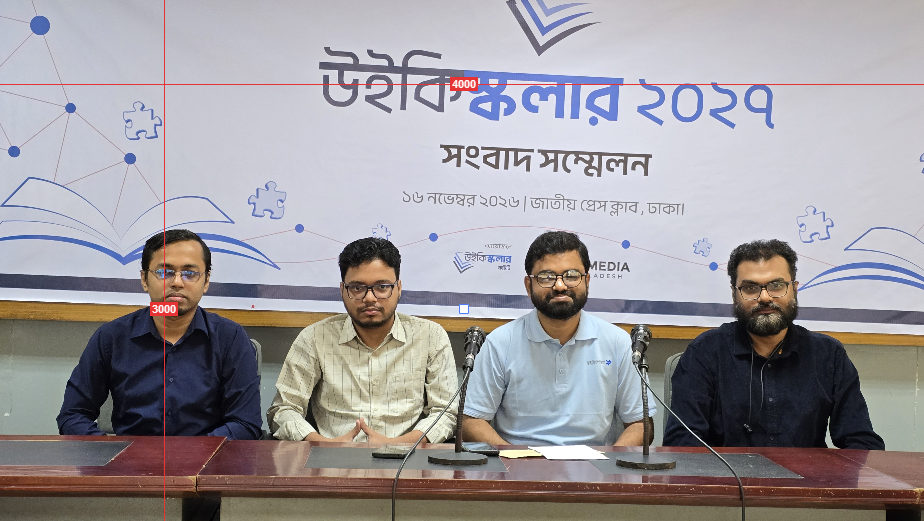
With the motto ‘Let curiosity remain boundless, let knowledge flourish,’ registration has begun for WikiScholar, an annual knowledge practice competition for secondary-level students across the country. At a press conference held at the National Press Club on Monday (16 November), organizers said registration will continue until 12 December 2026 and participation is completely free. The competition is being organized by the WikiScholar Organizing Committee with the overall cooperation of Wikimedia Bangladesh.
The full reading list of WikiScholar is composed of selected articles from Bangla Wikipedia; to prepare, students have to go directly to Wikipedia and read the full articles. The goal of this competition is to build awareness about open knowledge and safe internet use. Organizers said that in this era of artificial intelligence and social media, one of the main aims of this event is for students to learn to look for the sources of answers and verify information. At the press conference, member secretary of the organizing committee Masum Al Hasan Raki presented the details of the competition. Wikimedia Bangladesh General Secretary Delwar Hossain and competition joint secretary Muhammad Yahia were present. It may be noted that after a pilot first edition in the Dhaka and Rajshahi regions in 2026, students from 64 districts of the country will be able to participate in the 2027 edition.
The competition will be held in three rounds. Students’ guardians will fill in the online registration form at wikischolar.bd; after registration, each student will receive a WikiScholar ID. The first round, i.e. the online preliminary round, will be held on Saturday, 19 December 2026. It can be taken from a mobile phone, tablet or computer; questions will be in Bangla and of two types: knowledge-based and analytical.
The country’s 64 districts have been divided into six regions named after six rivers. Those selected through the online exam will take part in the in-person regional round, where, along with the competition, there will be workshops and awareness sessions. The probable schedule of the regional rounds: Padma region 2 January, Teesta 9 January, Karnaphuli 16 January, Surma 23 January, Rupsa 30 January and Jamuna region 6 February 2027. The top 10 from each region, 60 in total, will take part in the national final round. The final round and national festival will be held in Dhaka on Saturday, 8 May 2027.
This year’s reading list includes 25 articles from Bangla Wikipedia on history, literature, technology, environment and economics: 10 in the first round, 12 in the regional round and 16 in the final round. Along with Bangladesh’s Liberation War, the Bangla Language Movement and the Sundarbans, the list includes artificial intelligence, ethical use of artificial intelligence, misinformation and information security.
The champion of the national round will receive a MacBook, the first runner-up a laptop and the second runner-up an e-reader; each will also receive Tk 10,000 through bKash. The fourth and fifth place holders will receive Tk 5,000 each, and those in sixth to tenth place will receive Tk 3,000 each. Students who score 40 percent or more in the online round will receive a digital certificate, and all participants in the regional round will receive a printed certificate and souvenir.
Ali Haider Khan Tanmoy, president of the WikiScholar Organizing Committee, said, it is our responsibility to show children the correct use of technology. Requesting guardians and teachers, he said, encourage your children and students to join WikiScholar. Detailed information can be found on the wikischolar.bd website and the facebook.com/wikischolar page.