Economy
How Iran-Israel war may cost Bangladesh economy

In recent months, Bangladesh’s economy has shown signs of recovery, particularly in export earnings and inward remittances. The volatility in the foreign exchange market has also begun to ease after over a year and a half. However, the Iran-Israel conflict has emerged as a fresh concern, posing a potential threat to the nation’s ongoing recovery efforts.
Businesses and economists have expressed concerns that if the conflict escalates and prolongs, it could have various repercussions on Bangladesh’s economy.
One such impact could be the destabilisation of the energy market and subsequent price fluctuations, akin to what occurred following the Russia-Ukraine conflict in 2022. This could lead to increased burdens on Bangladesh’s oil and LNG import bills due to inevitable price hikes.
They caution that the Red Sea shipping route, already affected by Yemen’s Houthi attacks, could face additional disruptions. This situation could potentially have significant impacts on global supply chains, especially if there are further complications at the Strait of Hormuz which sees one-fifth of global oil production flow through it daily. This could result in increased freight costs and shipping times.
“Further escalation means everything will be difficult for us and many others,” said Azam J Chowdhury, chairman of East Coast Group, a conglomerate engaged in diverse sectors ranging from oil and gas to ocean-going ships, as well as banking and finance, among others.
Azam said the price of oil has already risen by $1 per barrel, and it is likely to further increase if the conflict between Iran and Israel persists. The state-owned Bangladesh Petroleum Corporation (BPC) has generated approximately Tk4,000 crore in profits since implementing the automated monthly pricing formula. However, these profits might not be sustained if prices further increase. Therefore, the pressure on the balance of payments (BOP) will further intensify.
Dr Masrur Reaz, CEO of the private think-tank Policy Exchange of Bangladesh, said an unstable energy market could lead to price escalations and increase import bills. If the government fails to import energy at higher prices, there may be an increase in load shedding and economic losses.
He said the Red Sea route, already experiencing disruptions with ships rerouting via Africa, would further increase shipping time and costs if trade through the Strait of Hormuz is disrupted. This situation could potentially create a crisis for ships due to the additional time required to navigate through the African region.
While neither Iran nor Israel directly hosts Bangladesh’s migrant workers, the repercussions of the conflict will be felt in other Middle Eastern countries, notably Saudi Arabia and the UAE, where hundreds of thousands of Bangladeshis are employed, Masrur said, noting that the war’s impact on tourism and other service sectors in these countries will inevitably affect the livelihoods of Bangladeshi workers residing there.
“In the short term, expatriate Bangladeshis may not lose their current jobs, but new recruitment will likely be halted. As a result, the inflow of remittances will decrease, putting pressure on the balance of payments,” he said.
Masrur added that if the conflict persists for a year or more, Bangladeshis may indeed begin to lose their jobs.
Professor Mustafizur Rahman, a distinguished fellow at the Centre for Policy Dialogue (CPD), reiterated concerns about the rise in energy prices and maritime trade costs.
He said if the conflict escalates, the global economy would suffer negative consequences. Consequently, demand in the USA and EU markets could decrease, with the obvious impact to be felt on Bangladesh’s garment exports.
However, Md Sazzadul Hassan, chairman and managing director of BASF Bangladesh Limited, cautioned against premature conclusions, stating that the outcome depends on how the tension unfolds.
“In general, the ongoing shipping challenges are likely to worsen, and fuel costs may skyrocket,” he said.
Nonetheless, he said, since a large number of Bangladeshis work in the Middle East, any further escalation could potentially impact these workers.
Oil price after Iran’s missile attack on Israel
Iran possesses extensive oil reserves and ranks as the third-largest producer within the oil cartel OPEC. According to CNBC, an American business news channel, any disruption to its ability to supply global markets could result in elevated oil prices. The potential closure of the Strait of Hormuz could further exacerbate this situation.
CNBC reported on Monday that oil prices could surge to $100 per barrel and beyond if renewed fears of a regional war emerge.
“Any attack on oil production or export facilities in Iran would drive the price of Brent crude oil to $100, and the closure of the Strait of Hormuz would lead to prices in the $120 to $130 range,” reports CNBC quoting Andy Lipow, president of Lipow Oil Associates.
Meanwhile, Reuters reports a 1% decrease in oil prices on Monday, indicating the market’s downplaying of the risk of a broader regional conflict following Iran’s weekend attack on Israel.
Brent futures for June delivery dropped by 99 cents, approximately 1%, reaching $89.46 a barrel by 0933 GMT on Monday. Meanwhile, West Texas Intermediate futures for May delivery experienced a decline of $1.05, around 1.2%, standing at $84.61.
Earlier on 12 April, oil benchmarks had risen in anticipation of Iran’s retaliatory attack, with prices touching their highest since October.
The report indicates that the price of each barrel of Iran’s heavy crude oil in March 2024 reached $83.48, marking a $3.14 increase compared to the previous month.
Furthermore, the average oil price of OPEC in March 2024 reached $84.22, reflecting a $2.99 growth compared to the preceding month, as stated in the report.



The International Monetary Fund (IMF) has urged Bangladesh to maintain a tight monetary policy to contain inflation, while stressing that monetary tightening alone will not be enough to restore economic stability.
Inflation in Bangladesh rose to 8 per cent in September, according to the IMF. The Washington-based lender has called for broader reforms in the financial sector, stronger revenue mobilisation and improvements in overall economic management to address the country’s persistent economic challenges.
Sonali Jain-Chandra, deputy director of the IMF’s Asia and Pacific Department, made the remarks in response to a question at a news conference on the economic outlook for Asia and the Pacific, held on the sidelines of the IMF and World Bank Group annual meetings in Bangkok, Thailand.
Asked whether tight monetary policy alone would be sufficient to tackle inflationary pressures that have persisted for more than three and a half years, Jain-Chandra said maintaining a restrictive monetary stance was important, but needed to be accompanied by other reforms.
Bangladesh is currently facing challenges in three key areas: revenue mobilisation, the financial sector and inflation, she said.
The IMF also expressed concern over the fragile state of Bangladesh’s financial sector, saying a credible reform strategy was needed to strengthen the sector’s capacity and ensure stability.
The fund also highlighted the country’s persistently weak revenue collection. Bangladesh’s tax-to-GDP ratio has declined over time and currently stands at around 7 per cent, placing it among the lowest in the world, according to the IMF.
The IMF stressed the need for a coordinated effort to increase revenue collection, saying higher government revenues were essential to finance development expenditure and strengthen the financial sector.
It called for necessary reforms to the revenue system and effective measures to improve the government’s capacity to generate income.
Talks Under Way on New IMF Programme
Meanwhile, discussions are continuing on a potential new lending programme for Bangladesh.
Jain-Chandra said Bangladeshi authorities approached the IMF in May for support under a new programme after deciding not to draw further instalments under the previous arrangement.
In response to the request, an IMF mission visited Dhaka in July to discuss various aspects of Bangladesh’s economic reform agenda.
According to Jain-Chandra, the reform issues discussed during the visit were closely aligned with the recommendations outlined in the IMF’s Article IV consultation for Bangladesh earlier this year.
The IMF has remained in regular contact with Bangladeshi authorities since the July visit, she said.
Jain-Chandra added that the fund remained closely engaged with the authorities and was ready to support Bangladesh in initiating the reforms needed to address its economic challenges.
The International Monetary Fund (IMF) has projected that Bangladesh’s gross domestic product (GDP) will grow by 3.2 per cent in the 2026-27 fiscal year, while average inflation could rise to 10.9 per cent, signalling mounting pressure on the country’s economy.
The projections were outlined in the IMF’s World Economic Outlook (WEO) report, released on Tuesday.
The latest growth forecast marks a significant downward revision from the 4.3 per cent projected by the IMF in April. The fund had subsequently forecast growth of 3.5 per cent in July before lowering its estimate further to 3.2 per cent.
The IMF has also sharply revised its inflation outlook for Bangladesh. In April, it projected average inflation of 6 per cent for the 2026-27 fiscal year. The latest estimate raises that figure to 10.9 per cent.
The combination of slower economic growth and persistently high inflation points to continued pressure on Bangladesh’s macroeconomic stability.
Bangladesh growth outlook trails other forecasts
The IMF’s latest growth projection for Bangladesh is lower than those of other major international development institutions.
The World Bank has forecast GDP growth of 3.4 per cent for Bangladesh in the 2026-27 fiscal year, while the Asian Development Bank (ADB) has projected growth of 4 per cent.
According to the IMF, Bangladesh’s economy grew by 3.6 per cent in the 2025-26 fiscal year, following growth of 3.5 per cent in the preceding fiscal year.
India, Bhutan expected to grow faster
The IMF has projected stronger economic growth in neighbouring countries, with India’s economy expected to expand by 7 per cent and Bhutan’s by 6.9 per cent in the relevant fiscal year.
The contrasting forecasts highlight the challenges facing Bangladesh as it seeks to restore economic momentum while tackling persistent inflation.
The IMF’s latest projections come as the annual meetings of the IMF and the World Bank Group are underway in Bangkok, Thailand.
Bangladesh’s economic situation, reform programmes and efforts to secure financing from development partners are among the key issues receiving attention during the meetings.
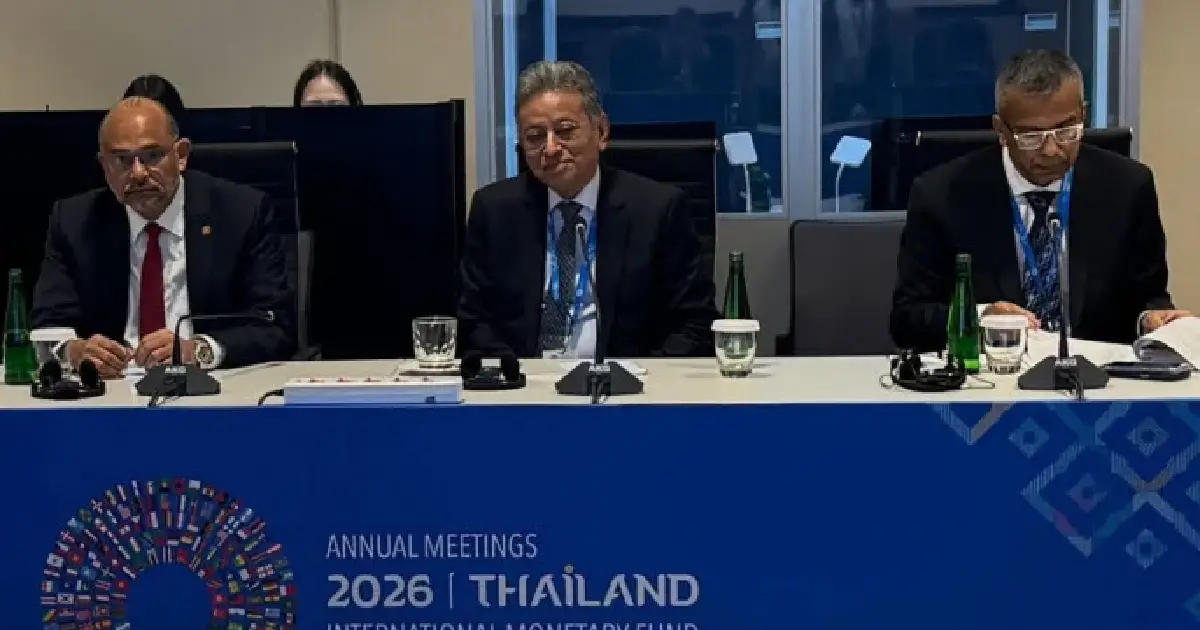
The World Bank supports the Bangladesh government’s policies to address the country’s current economic challenges, restore stability and implement medium- and long-term development plans, Finance Minister Amir Khasru Mahmud Chowdhury said on Tuesday.
He said the global lender was broadly aligned with Bangladesh’s economic programmes and policy priorities and would continue to support the country’s economic recovery and future development.
The finance minister made the remarks while speaking to journalists after a meeting with a World Bank managing director in Bangkok, Thailand, on October 13.
Amir Khasru said Bangladesh’s economy was facing significant challenges when the current government took office. Alongside dealing with the financial and economic burdens inherited from the previous period, the country was also having to navigate global economic disruptions caused by ongoing wars and geopolitical tensions.
He said the World Bank understood the realities facing Bangladesh and supported the government’s policy approach to overcoming the economic difficulties.
“The World Bank is aligned with the programmes and policy direction we have set to restore economic stability and ensure future development,” the minister said, adding that both sides would continue working together.
He said the World Bank was willing and prepared to provide the assistance Bangladesh needed.
No decision yet on proposed $10 billion in additional assistance
Clarifying reports that Bangladesh had sought an additional $10 billion in assistance from the World Bank, the finance minister said no final decision had been made.
He said discussions with the lender were ongoing and that possible proposals would be reviewed in light of those discussions. The process could take several months to complete, he added.
“No decision is being made at this stage. I have seen several inaccurate reports here and there. This is a discussion, and there will be follow-up based on these talks. It is a process that will continue over the next few months,” he said.
The minister stressed that the ongoing discussions should not be interpreted as a final agreement. Rather, they were intended to establish a basis for determining the next steps and considering possible decisions.
Further discussions would also take place in Dhaka, he said.
Expressing satisfaction with the progress of the talks, Amir Khasru said Bangladesh was in a favourable position to establish a framework for future cooperation.
He reiterated that the government’s economic policies, programmes and medium- and long-term development plans were broadly aligned with the World Bank’s position.
Government’s economic agenda aligned with BNP manifesto
The finance minister also said the World Bank’s position was consistent with the government’s economic plans and the Bangladesh Nationalist Party’s (BNP) election manifesto.
He said discussions were underway on how to address the country’s economic challenges and achieve the government’s development objectives.
According to the minister, the government has submitted a written proposal outlining a framework for partnership with the World Bank. Discussions on the proposed framework will continue.
He said the World Bank had provided various recommendations and suggestions, while Bangladesh had also presented its own proposals and recommendations.
Further discussions would be based on these submissions, he added.
Government optimistic about inflation and GDP targets
Asked about forecasts by the World Bank and the Asian Development Bank (ADB) on inflation and gross domestic product (GDP) growth, and how they compared with the government’s targets, the finance minister said the government did not intend to dispute the projections made by other institutions.
He said the institutions had prepared their forecasts based on their own calculations and analyses, adding that the country’s economic performance would become clearer as progress on key indicators was assessed over time.
“We do not want to dispute anyone’s projections. They have made their estimates based on their own calculations. We are carrying out our work, and they are doing theirs. What matters most is that the cooperation we need continues,” he said.
The minister expressed optimism that the government would be able to meet the inflation targets set out in the national budget.
He said the government was working to restore economic stability through continued engagement with the World Bank, implementation of its economic policies and progress on medium- and long-term development plans.