World Biz
Jiangxi Hosts 2026 Youth Leaders Dialogue to Advance Global Cooperation

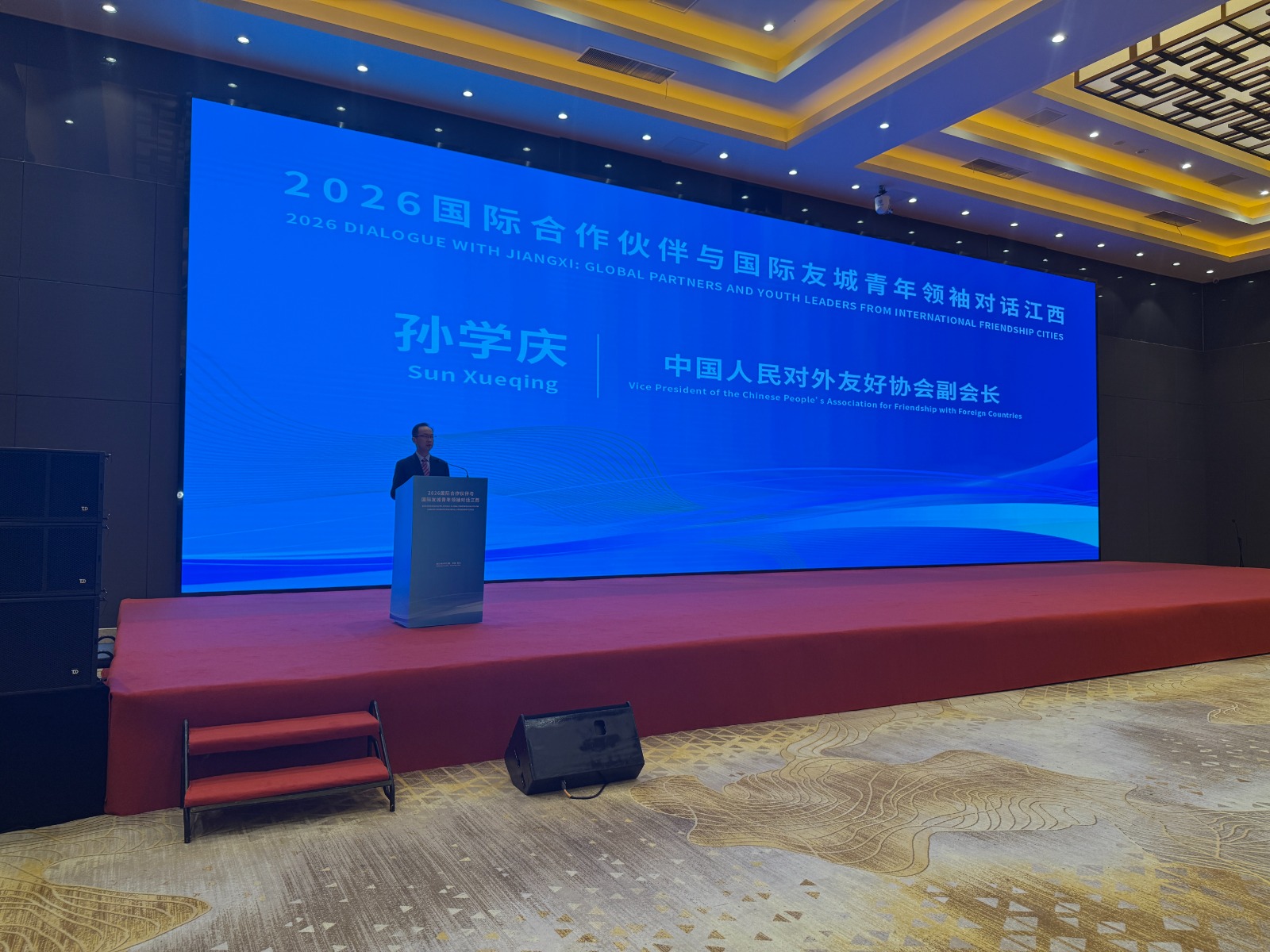
China Correspondent: More than 200 youth leaders and representatives from 25 countries gathered in Jiangxi Province, China from September 21 to 25, 2026, for the Dialogue between Youth Leaders from Jiangxi and International Friendship Partners at Different Levels, which aimed to deepen cross-border cooperation and strengthen people-to-people ties among young leaders worldwide.
Held under the theme “Energy of Youth for a Better World,” the five-day program focused on green development, economic and trade collaboration, vocational education, and youth development. It featured thematic dialogues, industrial visits, project matchmaking sessions, and cultural experiences to provide a platform for global youth to exchange insights, share resources, and advance collaborative projects.
The event was hosted by the Chinese People’s Association for Friendship with Foreign Countries (CPAFFC) and jointly organized by the Jiangxi Provincial Association for Friendship with Foreign Countries, the China Friendship Foundation for Peace and Development, the Jiangxi Provincial Youth Federation, the Jiangxi Branch of the China Vocational Education Association, and the Jiangxi Provincial Federation of Industry and Commerce.
Speaking at the opening ceremony, Xia Wenyong, Vice Governor of Jiangxi Province, welcomed Chinese and foreign guests and outlined the province’s recent development. He described people-to-people friendship, sister-city exchanges, and youth exchanges as the enduring driving forces behind Jiangxi’s opening up to the outside world. Xia said international partners should leverage their channel advantages to align with Jiangxi’s industrial chain, sister cities should maintain regular communication and broaden cooperation, and youth leaders should act as ambassadors of friendship, deepen mutual learning, and inject lasting youthful energy into long-term cooperation.
Sun Xueqing, Vice President of the CPAFFC, noted that people-to-people diplomacy, as a foundational effort for enhancing friendship among peoples and promoting state-to-state relations, now holds greater importance and offers a broader stage for action. He encouraged representatives of international partners and young leaders to use their advantages in resources, technology, channels, and platforms to deepen practical cooperation and build a new landscape of mutually beneficial development. He also called on them to serve as youthful ambassadors for the spread of civilization, foster mutual learning with a broad vision and inclusive mindset, and actively align with international cooperation resources and sister-city exchange platforms to generate new momentum for openness and innovation.
Also delivering remarks at the ceremony were Anoop Ranjan Bhattarai, Chairman of the Nepal-China Executives Council, and Lopez, Second Deputy Mayor of Alcorcón, Spain.
During the opening ceremony, Ji’an City in Jiangxi Province and Alcorcón in Spain signed a cooperation agreement, as did the Jiangxi Provincial People’s Association for Friendship with Foreign Countries and the Cambodia-ASEAN Investors Association, reinforcing the event’s cooperation focus.
Among the invited participants were two Bangladeshi representatives: Mohammad Tawhidur Rahman, Chief Executive of Lilliput Essentials Company, and Dr Mohammad Saiyedul Islam, a Senior Lecturer and Researcher at the School of Overseas Education (School of Foreign Languages) at Sanming University.
Mohammad Tawhidur Rahman addressed the sub-topic “Youth Perspectives: Embracing Inclusive Collaboration for Win-Win Development.” At the same time, Dr Mohammad Saiyedul Islam spoke on “The Similarities and Differences in the Growth and Development of Chinese and Bangladeshi Youth: Reflections from My Experience” during the International Symposium on Youth Development and the 9th Forum on the Communist Youth League and Youth Development.
Beyond the conference halls, participants traveled to Ji’an and Fuzhou to gain firsthand insight into Jiangxi’s economic and social development and to explore cooperation opportunities in trade, culture, and tourism. Their itinerary included visits to the Zixi County Two Mountains Transformation Center, Dajue Mountain, Lingzhi Town, Wenchangli Historical and Cultural Park, and Jiangxi Weijia Bamboo Culture Technology Co., Ltd.
The dialogue brought together young leaders from international partners and sister cities across 25 countries, including Bangladesh, Nepal, Cambodia, Indonesia, Sri Lanka, South Korea, Laos, Thailand, Japan, Pakistan, Spain, Russia, Italy, Bulgaria, Ireland, France, Portugal, Zambia, Algeria, Nigeria, Botswana, Argentina, Australia, New Zealand, and Fiji, as well as representatives from the Macao region and youth delegates from Jiangxi.
Together, they discussed cooperation and friendship in the economy, trade, education, and culture, underscoring the dialogue’s focus on practical collaboration.

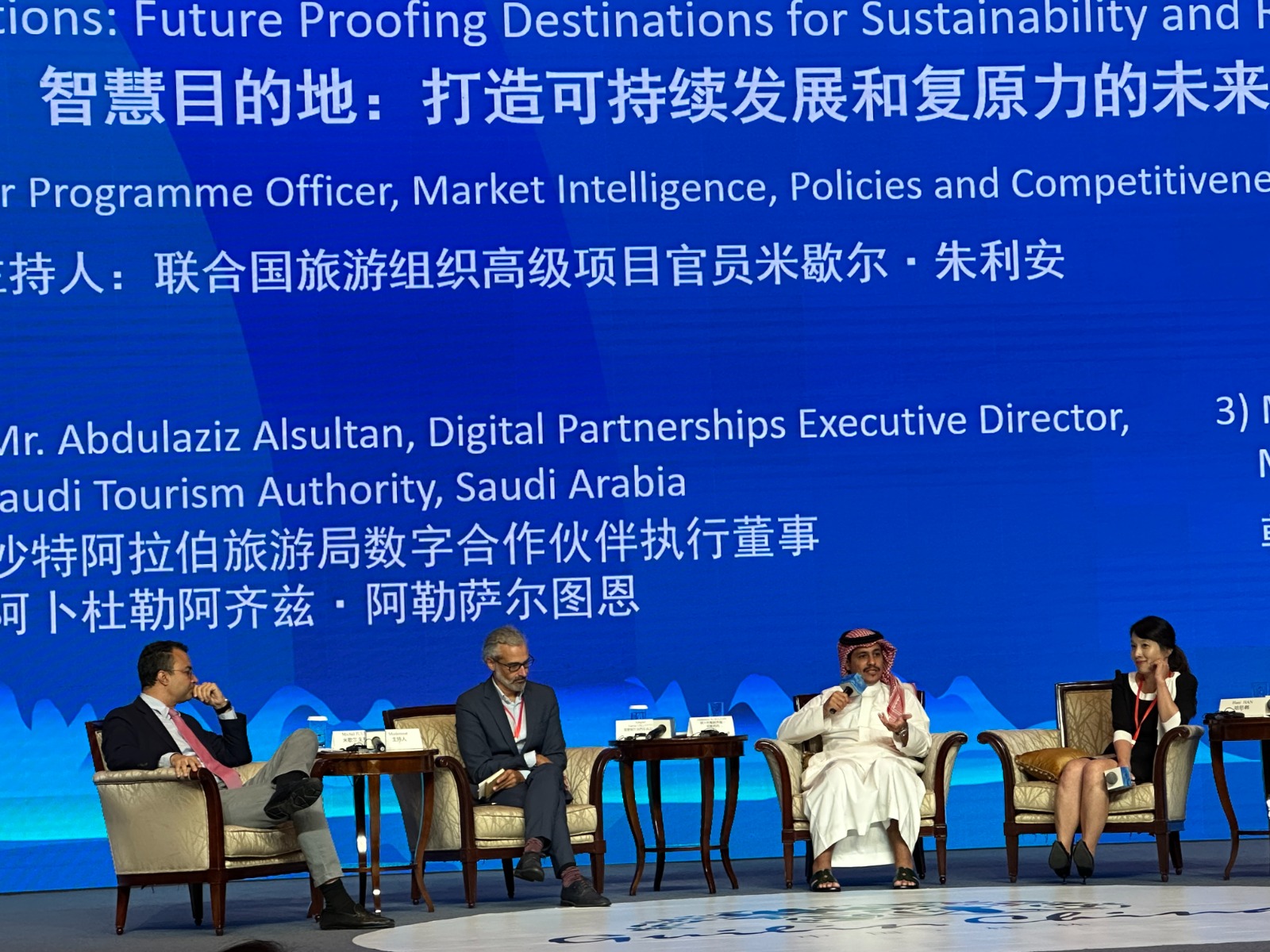
The 2025 UN Tourism/PATA Forum on Tourism Trends and Outlook, held from September 18-20, concluded in Guilin, China, bringing together leading figures from over 20 countries to address the industry’s most pressing challenges. Jointly hosted by the UN World Tourism Organisation (UN Tourism) and the Pacific Asia Travel Association (PATA), the three-day event centered on building a more resilient, sustainable, and “smart” tourism sector.
- Tourism Governance: Led by UN Tourism, this session featured policy insights and international cooperation models from countries including Slovenia, Indonesia, and Brazil.
- Tourism Resilience in the Asia-Pacific: Organized by PATA, this discussion included practical case studies from Nepal and Spain, providing real-world examples of how destinations are adapting to challenges.
- Tourism Talent Development: Hosted by The Hong Kong Polytechnic University, this pillar focused on cultivating a skilled workforce to meet the evolving demands of the industry.
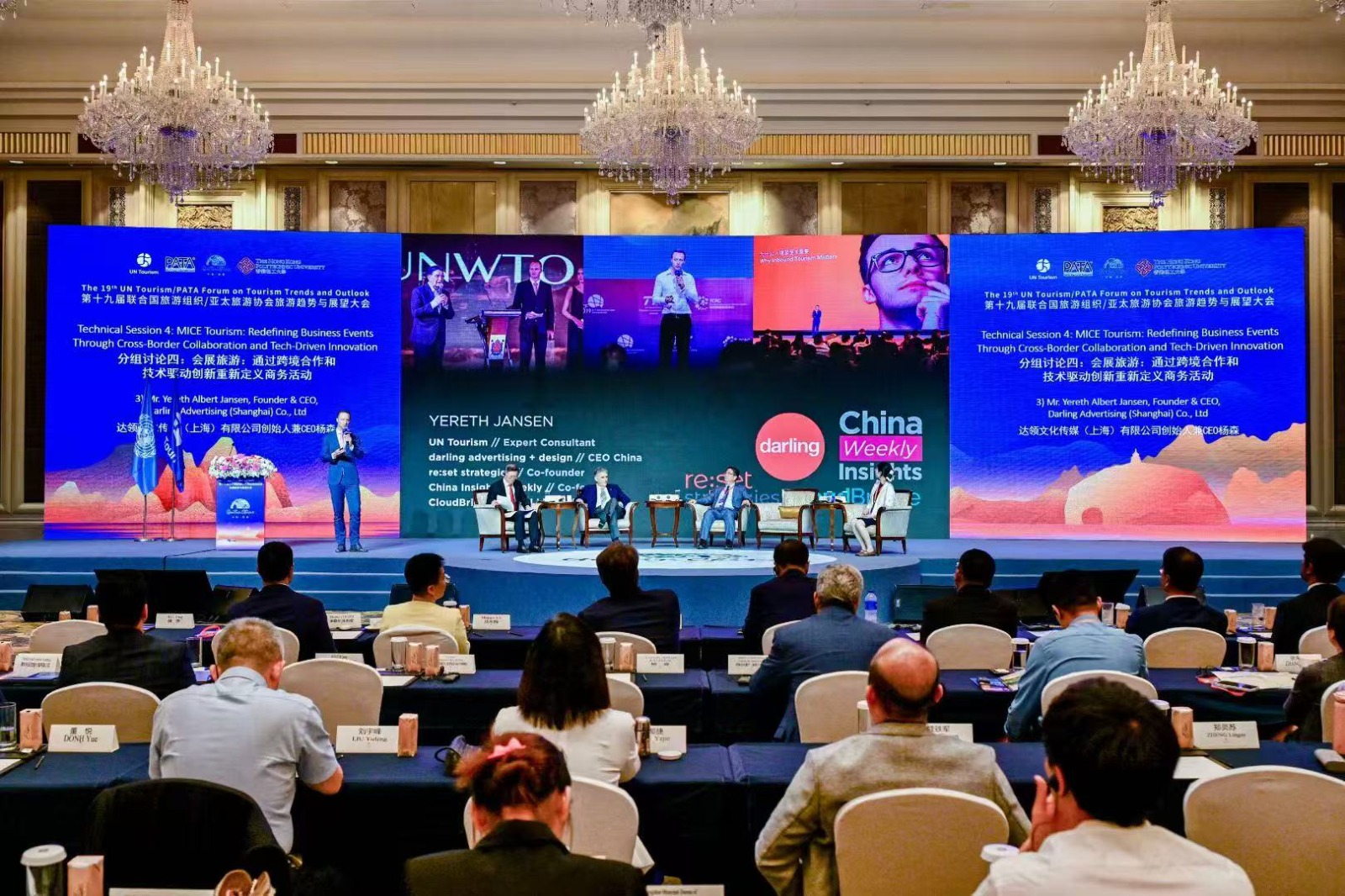
A dedicated Guilin Session also explored innovations in the meetings, incentives, conferences, and exhibitions (MICE) sector, with contributions from Greece, South Korea, and China.
A major highlight of the forum was the global launch of UN Tourism’s latest World Tourism Barometer, which provided updated data on international travel flows and economic impacts. Keynote speeches from industry giants like TUI Group offered a deep dive into European tourism markets, while Alipay’s Fliggy showcased new models in digital tourism. These presentations were followed by panels on the future of smart tourism destinations and new methods for tourism economic measurement.
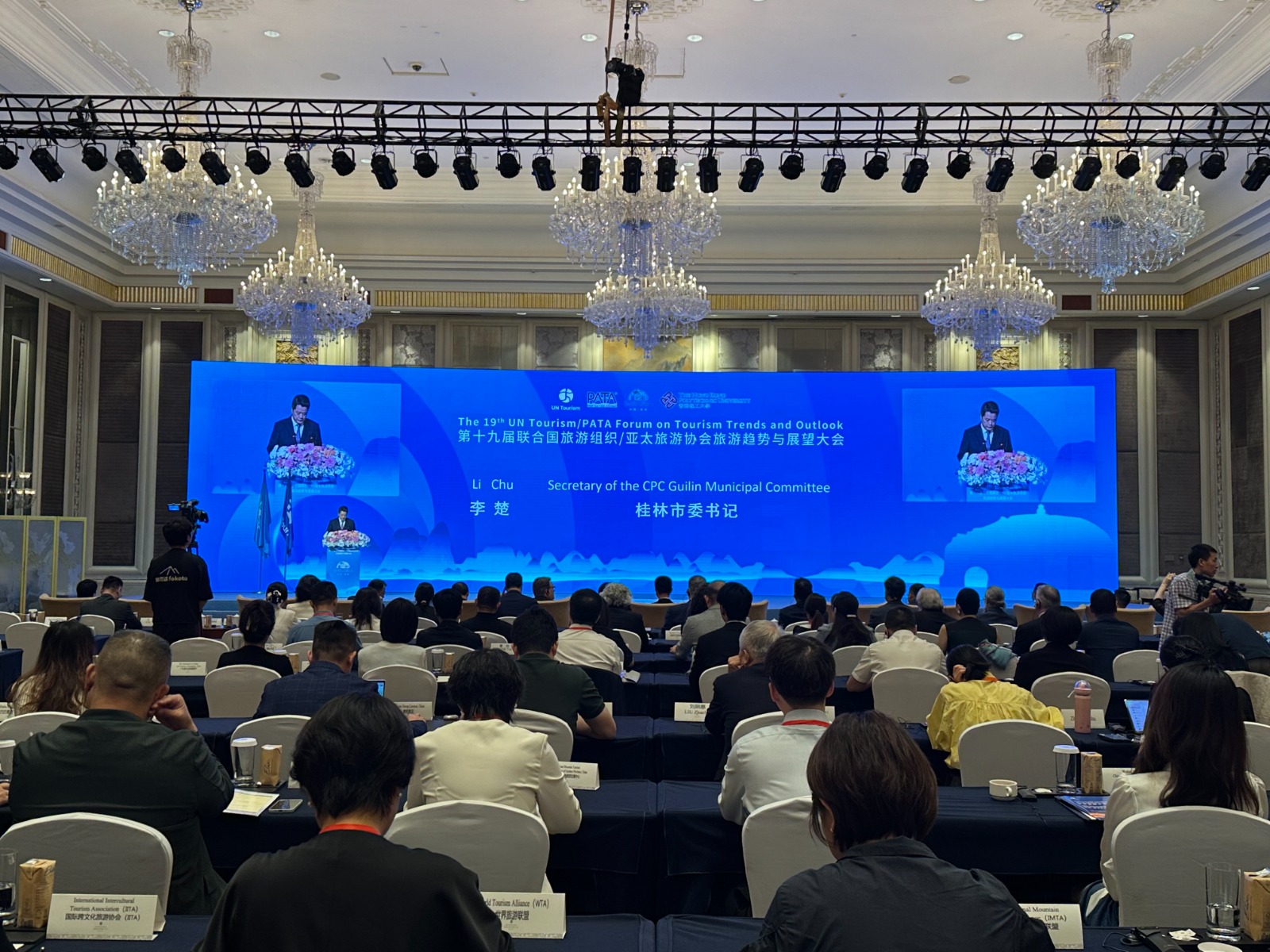
The forum’s opening ceremony on September 19 featured addresses from Liu Shijun of UN Tourism and the President of PATA, along with local leaders. Their insights, combined with valuable case studies from delegates and experts from countries like the Maldives and institutions such as South Korea’s Youngsan University, laid the groundwork for the “Guilin Solutions”—a set of recommendations designed to advance sustainable and intelligent tourism worldwide.
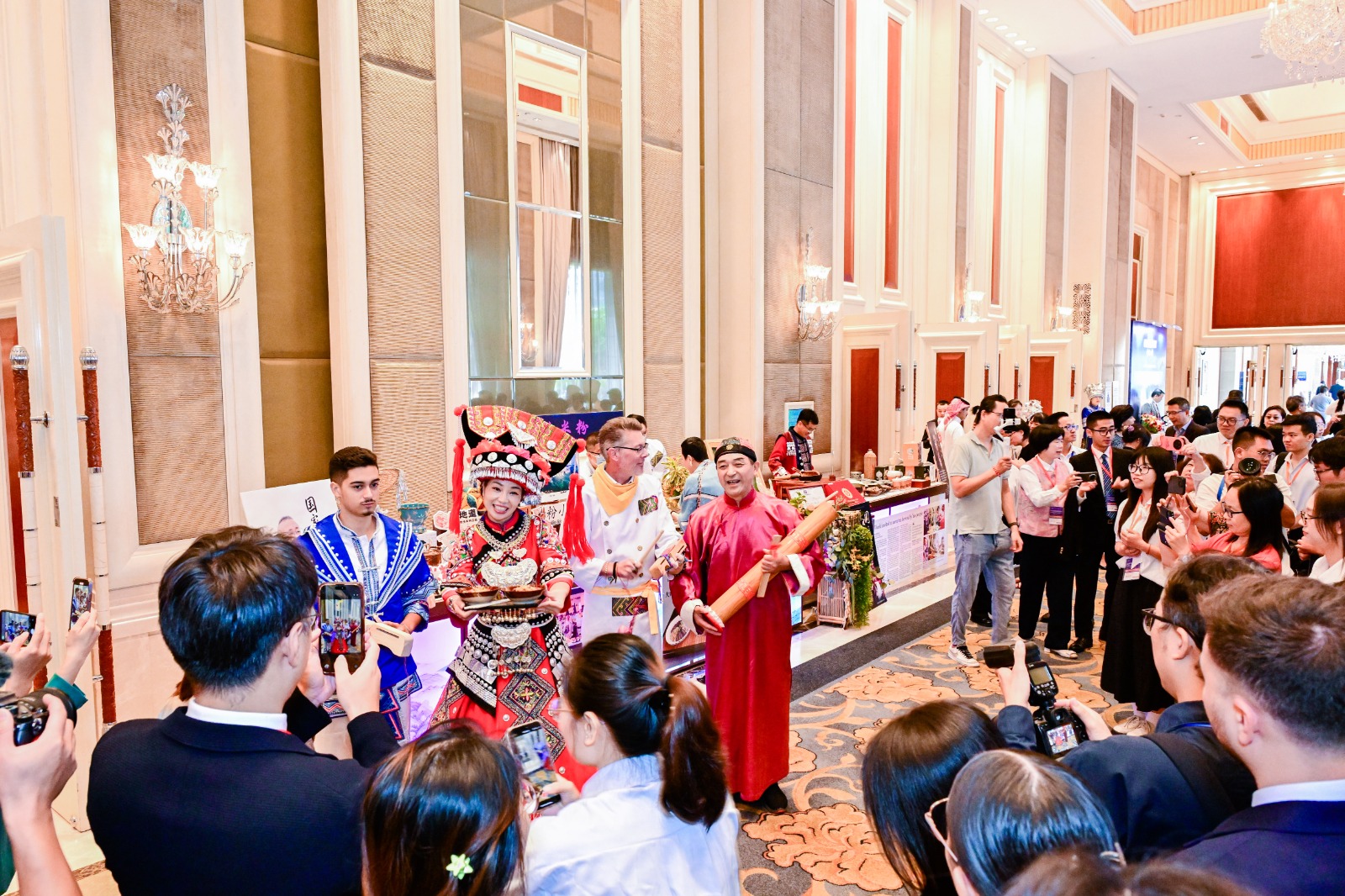
Beyond the formal sessions, delegates were given a first-hand look at Guilin’s efforts to become a world-class tourism destination. Visits to local cultural and tourism landmarks demonstrated how the city is integrating culture, technology, and sustainability into its tourism strategy. The forum not only reinforced Guilin’s position as a hub for international dialogue but also offered concrete steps for building a more resilient and innovative global tourism industry.
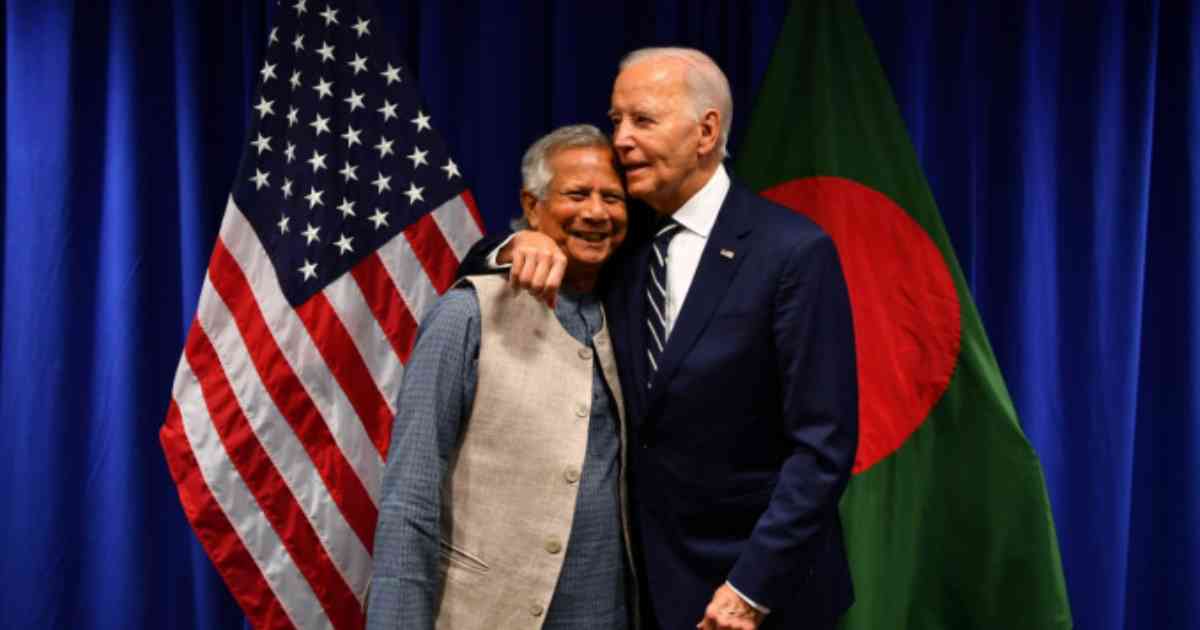
US President Joe Biden has expressed his nation’s full backing for Bangladesh and the interim government led by Muhammad Yunus during a bilateral meeting held on the sidelines of the United Nations General Assembly (UNGA) in New York. This marks the first time in Bangladesh’s history that a US president has met with the country’s head of government at a UNGA session, as confirmed by a statement from the Chief Adviser’s Office.
In this unprecedented encounter, Chief Adviser Prof Yunus briefed President Biden on the significant sacrifices made by students who fought against the previous government, leading to the opportunity to rebuild the country. Prof Yunus underscored the importance of succeeding in this national rebuilding effort, calling for US cooperation in the process.
President Biden praised the students’ dedication, stating that their sacrifice calls for further commitment from all, including the US. During the meeting, Prof Yunus presented Biden with a copy of The Art of Triumph, a book featuring wall paintings by students and young revolutionaries.
Prof Yunus, on his first visit to the US as head of Bangladesh’s government, is attending the 79th UNGA, which runs from September 19 to 30. The theme of this year’s debate is “Leaving no one behind: acting together for the advancement of peace, sustainable development, and human dignity for present and future generations.”
Rare Diplomatic Meeting Signals Strengthened US-Bangladesh Ties
Speaking on the significance of the meeting, Chief Adviser’s Press Secretary Shafiqul Alam highlighted the rarity of such an engagement, noting that the US and Bangladesh already enjoy strong relations. “This meeting elevates our relationship to a new level,” Alam stated, as reported by local media.
Observers suggest that the bilateral meeting, which is uncommon for US presidents during the UNGA, signals Washington’s intention to support Bangladesh through its transitional period. Dhaka is hopeful that the encounter will lead to a new strategic partnership that enhances cooperation on multiple fronts.
Yunus Receives Warm Reception from Global Leaders
Earlier in the day, Chief Adviser Muhammad Yunus was welcomed by several world leaders at a reception hosted by UN Secretary-General Antonio Guterres. Held at the North Delegate Lounge in the UN headquarters, the event served to greet the leaders participating in the 79th session of the UNGA.
During the reception, Yunus exchanged greetings with Brazilian President Luiz Inacio Lula da Silva, Mauritian President Prithvirajsingh Roopun, and UN High Commissioner for Human Rights Volker Turk, among others.
Yunus Meets Canadian Prime Minister Trudeau
On the sidelines of the UNGA, Chief Adviser Yunus also met with Canadian Prime Minister Justin Trudeau. The two leaders discussed ways to enhance Bangladesh-Canada relations, focusing on fostering freedom, institution-building, and youth development in Bangladesh.
Prime Minister Trudeau commended Prof Yunus for taking on the leadership role and reiterated Canada’s willingness to support Bangladesh in strengthening its institutions. Prof Yunus, in turn, praised Canada for its enduring friendship and requested increased visa allocations for Bangladeshi students.
The chief adviser also gifted Trudeau The Art of Triumph, further highlighting the contributions of young revolutionaries. In addition to Trudeau, Yunus is scheduled to meet with the managing director of the IMF, the Italian prime minister, and will speak at the Clinton Global Initiative and Friends of Bangladesh events.


Environmental and rights groups urged the European Union Tuesday to label Malaysia’s Sarawak region “high risk” under controversial new anti-deforestation rules to be implemented from the end of December.
The EU’s deforestation regulation (EUDR) is due to come into force at the end of the year, although Germany and Brazil have recently joined a string of countries urging that implementation be delayed.
Environmentalists and rights groups have, however, called on the EU to move forward with the regulation.
It will bar imports of a vast range of goods — from coffee to cocoa, soy, timber, palm oil, cattle, printing paper and rubber — if they are produced on land that was deforested after December 2020.
It also requires exporters to assess the risk of rights violations associated with production of the commodity.
In a joint statement, a group of Malaysian and international organisations said Sarawak in Malaysian Borneo should be considered “high risk” under the new rules.
Such a designation would mean closer scrutiny of timber and palm oil imported from the region — an unwelcome prospect for Malaysia, which is already pushing back against EUDR.
The NGOs argue Sarawak’s government plans to convert hundreds of thousands of hectares of natural forest to timber plantations, and is granting companies operating leases in areas that have not been surveyed for protection purposes.
Earlier this year RimbaWatch, one of the signatory groups, warned that around 15 percent of Malaysia’s natural forest is at risk because of concessions granted to companies.
Tuesday’s statement also alleges routine violations of Indigenous land rights, including limits on the amount of land that can be legally recognised, and the unilateral revocation of existing land titles.
“Logging companies are still bulldozing Indigenous peoples’ forests in Sarawak without consultation or consent from communities, which should translate into a ‘high risk’ classification,” said Celine Lim, managing director of SAVE Rivers, an Indigenous organisation from Sarawak.
– Vocal opponents –
Sarawak’s forestry department, and Malaysia’s plantation and commodities ministry did not respond to AFP’s request for comment on the claims.
Malaysia and Indonesia have been among the most vocal opponents of EUDR, arguing domestic anti-deforestation standards should be sufficient, and warning the rules will disproportionately harm smallholder producers who cannot meet onerous documentation requirements.
Environmental and rights groups have pushed back against these claims, including at talks in Brussels earlier this month between EU, Indonesian and Malaysian officials.
“Calls from EU governments to delay enforcement of the law are a deplorable abdication of leadership in the face of a climate emergency,” said Luciana Tellez Chavez, senior
environment and human rights researcher at Human Rights Watch.