Economy
PM Hasina asks nation to stay alert against anarchy ahead of next election


Prime Minister Sheikh Hasina on Friday (6 January) asked the people to remain vigilant against the anti-liberation clique which has started plotting to seize power through the backdoor ahead of the next general election.
“I would like to urge everyone to keep a watchful eye so that none can snatch away the rights of the people through conspiracy. At the same time everyone should be alert so that none could create anarchy and damage the lives, livelihood and properties of the people in the name of movement,” she said.
Hasina said the next national election will be held at the end of this year or early next year. But the anti-liberation, power-hungry plunderers of public assets have already active in creating anarchy.
“Their aim is to create a chaotic situation and seize state power through the backdoor, and impede the progress of democracy too,” she said in her 25-minute speech delivered at 7:30 pm.
The premier, who is also the president of the ruling Awami League, said the conspirators have employed hired intellectuals and statement-givers at home and abroad with looted money to malign Awami League. “They are trying to mislead people by spreading libels, false and fake information through social media. Don’t be misled by their falsehoods,” she said.
She requested the political parties and institutions that believe in democracy and the rule of law not to allow and fuel any weird idea (mooted by the cliques ahead of the next election) that would undermine the constitutional process.
“We expect a free, fair and impartial election (to be held next time),” she said, adding that this is the first time a law has been enacted in Bangladesh to constitute an Election Commission.
She said the current Election commission has been constituted under that law through a search committee. “The Election Commission was given financial independence. The Commission is working independently and will continue to do so in the future. The government will continue providing all assistance to the Election Commission for holding fair and peaceful elections,” she added.
She said Awami League is a party of the people that believes in the peace of the people and the power of the people. “If the people make the party winner by voting for it, Awami League will continue to discharge the national responsibility of building the country. If they don’t make it the winner, then we will go to the line of the people. But wherever we are, we will serve the people,” she added.
On the occasion of the 4th anniversary of her current regime, the prime minister extended her sincere greetings and congratulations to the citizens at home and abroad. She also wished them a very happy Christian New Year of 2023.
Focusing on the progress of the country during her governments since 2009, she said the image of Bangladesh has become brighter in the world arena in the last 14 years.
“Today none treats Bangladesh as a country of floods, droughts and disasters. Bangladesh is now an emerging economy and a role model for development,” she said.
PM Hasina said Awami League has been in the charge of governing the country for 14 years in a row after the formation of government in 2009.
“Our country has progressed a lot. But we have to take it forward further. Achieving a developed and prosperous Bangladesh is our goal. After building Digital Bangladesh, our next goal is to build a Smart Bangladesh,” she said.
She said the use of robotics, artificial intelligence, nanotechnology, genetic engineering, biological technology and digital devices will be ensured in all fields including the industrial, trade-business, health, education and agriculture sectors in a bid to build Smart Bangladesh, having smart government, smart population and smart industrial factories. “Emphasis has been placed on research in all areas,” she added.
The PM focused her government’s successes in bringing the cent percent population under electricity coverage, strengthening road and rail connectivity, increasing food production, implementation of different large projects including Padma Bridge, metro-rail, Bangabandhu Tunnel under Karnaphuli River, Rooppur Nuclear Power Plant, Dhaka-Mawa-Jajira Expressway, Bangabandhu-1 Satellite, 16-km Dhaka Airport-Kutubkhali Elevated Expressway projects, and setting up 100 economic zones.
She said the prices of daily essentials including fuel have soared also in Bangladesh as it happened at abnormal rates in the world due to the Russia-Ukraine war following the Covid-19 pandemic, sanctions and counter-sanctions imposed by the Western countries and Russia.
“We are purchasing some commodities at higher prices and distributing those at lower prices to the people with limited incomes,” she said adding that 10 million families can purchase rice at Tk 30 per kg and edible oil, pulses and sugar at affordable rates through TCB’s fair price cards, while five million families can buy rice at Tk 15 per kg in a month.
The PM depicted the present scenario of Bangladesh in different social and economic indicators, comparing to the situation 16 years ago at fag end of BNP-Jamaat alliance rule.
She said the per capita income increased to US$ 2,824 now from US$ 543 in the 2005-2006FY, while poverty rate declined to 20 percent from 41.5 percent, the average life expectancy increased to 73 years from 64.5 years and the literacy rate to 75.2 percent from 45 percent.
She said the GDP increased to US$ 460.75 billion in 2021-22FY from only US$ 60 billion, the size of national budget to Tk 678,64,000 crore in the 2022-23FY from Tk 61,057 crore, the export earnings to US$ 52.08 billion in 2021-2022FY from US$ 10.52 billion, and the remittance inflow went up to US$ 22.07 billion in 2021-22FY from only US$ 4.80 billion.
She said the reserve of foreign currencies increased from only US$ 3.5 billion in 2005-06FY to US$ 48 billion in 2021, but declined to US$ 34 billion now due to the global economic downturn and high inflation. Still Bangladesh has a sufficient reserve to meet the five-month export expenditures, she added.
The PM said the allocation against the social safety net programmes rose to Tk 113,576 crore in the current fiscal year from only Tk 373 crore in 2005-2006FY, while the subsidy to the agriculture sector went up to Tk 40,000 crore from Tk 592 crore.
She said the electricity generation capacity has increased to 25,826 megawatt now from only 3,600 megawatt at the end of BNP-Jamaat regime and the population under the electricity coverage to 100 percent from only 45 percent in the same period. “We ensured electricity facilities to cent percent people in 2022. We illuminated all the houses,” she said.
Hasina said Bangladesh is currently the 41st largest economy in the world. Today, Bangladesh has graduated to a developing country from a least developed country, she said.
Noting that Bangladesh has attained a revolutionary development in the communication sector, she said her government constructed and reconstructed hundreds of highways as well as bridges over major rivers, including Padma Bridge, Bangabandhu Jamuna Bridge, Teesta Bridge, Payra Bridge, 2nd Kanchpur Bridge, 2nd Meghna Bridge, 2nd Gomti Bridge in the last 14 years in order to establish an uninterrupted road and rail connectivity.
PM Hasina said some 100 bridges were simultaneously opened in a single day in November last, while some 100 roads were inaugurated simultaneously in a day in December last.
“This is a unique achievement in the development history of the country,” she said, adding that some 718 kilometers of highways have been upgraded to four or above lanes in the last 14 years.
“Today, the people have started reaping the benefits of our visionary plans,” she said
Noting that Father of the Nation Bangabandhu Sheikh Mujibur Rahman dreamt of building an exploitation-and- deprivation-free Sonar Bangla (golden Bengal), she urged all to come forward to realize his dream by building a happy-prosperous non-communal Bangladesh.
“Let’s work to build a smart country and bring smiles on the faces of the common people of this country,” she told the nation.


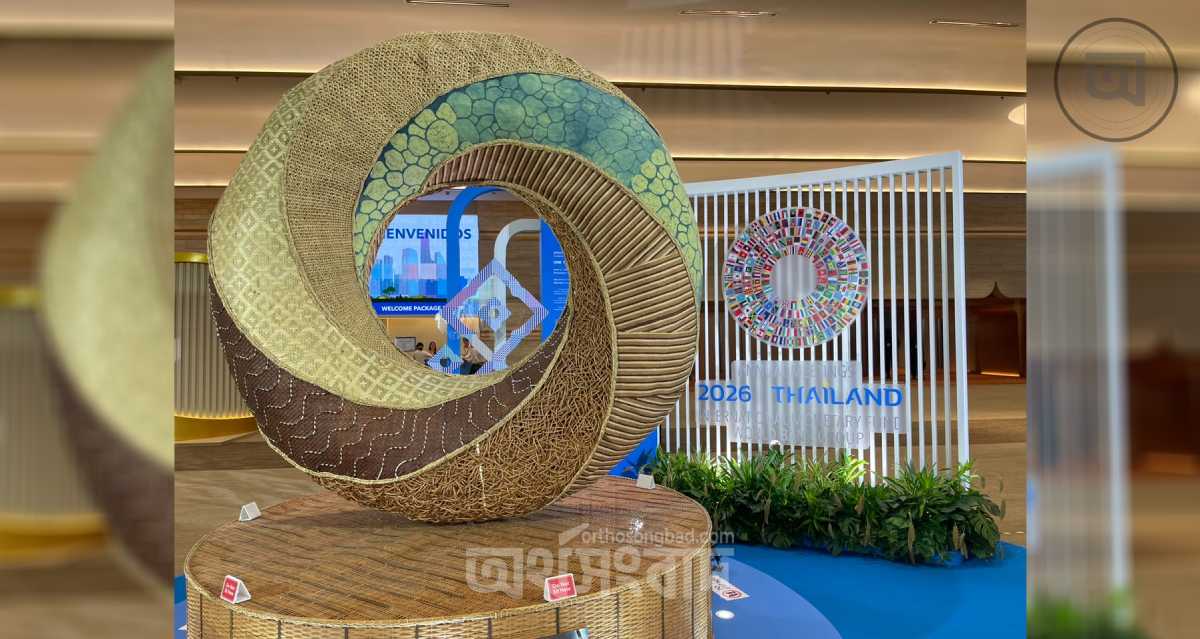
The International Monetary Fund (IMF) has urged Bangladesh to maintain a tight monetary policy to contain inflation, while stressing that monetary tightening alone will not be enough to restore economic stability.
Inflation in Bangladesh rose to 8 per cent in September, according to the IMF. The Washington-based lender has called for broader reforms in the financial sector, stronger revenue mobilisation and improvements in overall economic management to address the country’s persistent economic challenges.
Sonali Jain-Chandra, deputy director of the IMF’s Asia and Pacific Department, made the remarks in response to a question at a news conference on the economic outlook for Asia and the Pacific, held on the sidelines of the IMF and World Bank Group annual meetings in Bangkok, Thailand.
Asked whether tight monetary policy alone would be sufficient to tackle inflationary pressures that have persisted for more than three and a half years, Jain-Chandra said maintaining a restrictive monetary stance was important, but needed to be accompanied by other reforms.
Bangladesh is currently facing challenges in three key areas: revenue mobilisation, the financial sector and inflation, she said.
The IMF also expressed concern over the fragile state of Bangladesh’s financial sector, saying a credible reform strategy was needed to strengthen the sector’s capacity and ensure stability.
The fund also highlighted the country’s persistently weak revenue collection. Bangladesh’s tax-to-GDP ratio has declined over time and currently stands at around 7 per cent, placing it among the lowest in the world, according to the IMF.
The IMF stressed the need for a coordinated effort to increase revenue collection, saying higher government revenues were essential to finance development expenditure and strengthen the financial sector.
It called for necessary reforms to the revenue system and effective measures to improve the government’s capacity to generate income.
Talks Under Way on New IMF Programme
Meanwhile, discussions are continuing on a potential new lending programme for Bangladesh.
Jain-Chandra said Bangladeshi authorities approached the IMF in May for support under a new programme after deciding not to draw further instalments under the previous arrangement.
In response to the request, an IMF mission visited Dhaka in July to discuss various aspects of Bangladesh’s economic reform agenda.
According to Jain-Chandra, the reform issues discussed during the visit were closely aligned with the recommendations outlined in the IMF’s Article IV consultation for Bangladesh earlier this year.
The IMF has remained in regular contact with Bangladeshi authorities since the July visit, she said.
Jain-Chandra added that the fund remained closely engaged with the authorities and was ready to support Bangladesh in initiating the reforms needed to address its economic challenges.
The International Monetary Fund (IMF) has projected that Bangladesh’s gross domestic product (GDP) will grow by 3.2 per cent in the 2026-27 fiscal year, while average inflation could rise to 10.9 per cent, signalling mounting pressure on the country’s economy.
The projections were outlined in the IMF’s World Economic Outlook (WEO) report, released on Tuesday.
The latest growth forecast marks a significant downward revision from the 4.3 per cent projected by the IMF in April. The fund had subsequently forecast growth of 3.5 per cent in July before lowering its estimate further to 3.2 per cent.
The IMF has also sharply revised its inflation outlook for Bangladesh. In April, it projected average inflation of 6 per cent for the 2026-27 fiscal year. The latest estimate raises that figure to 10.9 per cent.
The combination of slower economic growth and persistently high inflation points to continued pressure on Bangladesh’s macroeconomic stability.
Bangladesh growth outlook trails other forecasts
The IMF’s latest growth projection for Bangladesh is lower than those of other major international development institutions.
The World Bank has forecast GDP growth of 3.4 per cent for Bangladesh in the 2026-27 fiscal year, while the Asian Development Bank (ADB) has projected growth of 4 per cent.
According to the IMF, Bangladesh’s economy grew by 3.6 per cent in the 2025-26 fiscal year, following growth of 3.5 per cent in the preceding fiscal year.
India, Bhutan expected to grow faster
The IMF has projected stronger economic growth in neighbouring countries, with India’s economy expected to expand by 7 per cent and Bhutan’s by 6.9 per cent in the relevant fiscal year.
The contrasting forecasts highlight the challenges facing Bangladesh as it seeks to restore economic momentum while tackling persistent inflation.
The IMF’s latest projections come as the annual meetings of the IMF and the World Bank Group are underway in Bangkok, Thailand.
Bangladesh’s economic situation, reform programmes and efforts to secure financing from development partners are among the key issues receiving attention during the meetings.
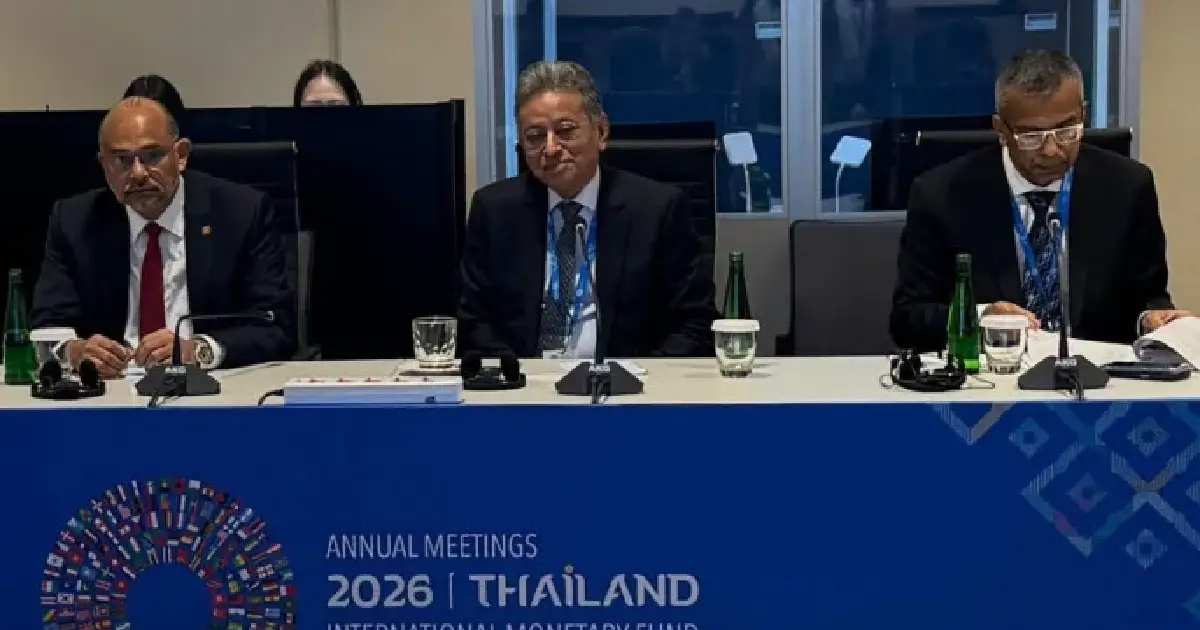
The World Bank supports the Bangladesh government’s policies to address the country’s current economic challenges, restore stability and implement medium- and long-term development plans, Finance Minister Amir Khasru Mahmud Chowdhury said on Tuesday.
He said the global lender was broadly aligned with Bangladesh’s economic programmes and policy priorities and would continue to support the country’s economic recovery and future development.
The finance minister made the remarks while speaking to journalists after a meeting with a World Bank managing director in Bangkok, Thailand, on October 13.
Amir Khasru said Bangladesh’s economy was facing significant challenges when the current government took office. Alongside dealing with the financial and economic burdens inherited from the previous period, the country was also having to navigate global economic disruptions caused by ongoing wars and geopolitical tensions.
He said the World Bank understood the realities facing Bangladesh and supported the government’s policy approach to overcoming the economic difficulties.
“The World Bank is aligned with the programmes and policy direction we have set to restore economic stability and ensure future development,” the minister said, adding that both sides would continue working together.
He said the World Bank was willing and prepared to provide the assistance Bangladesh needed.
No decision yet on proposed $10 billion in additional assistance
Clarifying reports that Bangladesh had sought an additional $10 billion in assistance from the World Bank, the finance minister said no final decision had been made.
He said discussions with the lender were ongoing and that possible proposals would be reviewed in light of those discussions. The process could take several months to complete, he added.
“No decision is being made at this stage. I have seen several inaccurate reports here and there. This is a discussion, and there will be follow-up based on these talks. It is a process that will continue over the next few months,” he said.
The minister stressed that the ongoing discussions should not be interpreted as a final agreement. Rather, they were intended to establish a basis for determining the next steps and considering possible decisions.
Further discussions would also take place in Dhaka, he said.
Expressing satisfaction with the progress of the talks, Amir Khasru said Bangladesh was in a favourable position to establish a framework for future cooperation.
He reiterated that the government’s economic policies, programmes and medium- and long-term development plans were broadly aligned with the World Bank’s position.
Government’s economic agenda aligned with BNP manifesto
The finance minister also said the World Bank’s position was consistent with the government’s economic plans and the Bangladesh Nationalist Party’s (BNP) election manifesto.
He said discussions were underway on how to address the country’s economic challenges and achieve the government’s development objectives.
According to the minister, the government has submitted a written proposal outlining a framework for partnership with the World Bank. Discussions on the proposed framework will continue.
He said the World Bank had provided various recommendations and suggestions, while Bangladesh had also presented its own proposals and recommendations.
Further discussions would be based on these submissions, he added.
Government optimistic about inflation and GDP targets
Asked about forecasts by the World Bank and the Asian Development Bank (ADB) on inflation and gross domestic product (GDP) growth, and how they compared with the government’s targets, the finance minister said the government did not intend to dispute the projections made by other institutions.
He said the institutions had prepared their forecasts based on their own calculations and analyses, adding that the country’s economic performance would become clearer as progress on key indicators was assessed over time.
“We do not want to dispute anyone’s projections. They have made their estimates based on their own calculations. We are carrying out our work, and they are doing theirs. What matters most is that the cooperation we need continues,” he said.
The minister expressed optimism that the government would be able to meet the inflation targets set out in the national budget.
He said the government was working to restore economic stability through continued engagement with the World Bank, implementation of its economic policies and progress on medium- and long-term development plans.