Economy
Anti-State Spreading Rumors Fabricated Stories Raises Defamation Controversy


Recent days have witnessed a resurgence of cyber criminals ahead of the upcoming twelfth national parliamentary elections. Several individuals and organizations, claiming to be foreign journalists, have been spreading rumors and gossip against key figures and institutions of the government through various social media platforms. They have been persistently demanding money from various organizations and individuals for an extended period. Failure to comply with their demands initiates a campaign of defamation. This cycle of defamation has targeted significant individuals and institutions in the country, ranging from the President and Prime Minister to the stock market regulator and Chairman of the Bangladesh Securities and Exchange Commission (BSEC). This cycle of propaganda has targeted various important individuals and institutions in the government, including the President, Prime Minister, Information Minister, Chairman of the Securities and Exchange Commission, Chief of Army Staff, former intelligence agency personnel, prominent businessmen, and industrialists, creating fabricated stories and spreading them through social media.
This pattern of defamation has now resurfaced with the emergence of new online-based entities involved in spreading false information under the guise of a self-proclaimed national institution. Despite the existence of well-known entities engaged in spreading misinformation, such as Nagorik TV and Corruption in Media, several new deceptive organizations are now surfacing. In the past few days, an organization called “Organized Crime and Reporting Project” has been soliciting sensitive information from highly important government offices via email. Furthermore, the country’s intelligence agency has recently identified 15 Bangladeshi cyber terrorists operating in different countries. The list of these terrorists is currently being updated. These revelations are based on credible sources.
According to sources, following Nagorik TV and Corruption in Media, new social media pages and channels under various names, including Organized Crime and Reporting Projects, are actively engaging in defamation campaigns against important national institutions and offices. Several individuals, including Mustafizur Rahman, also known as Tito Rahman, Nazmus Sakib, Jawad Nirjhor, and Zulkarnain, are spreading various gossip and rumors against key figures and organizations of the government. Their defamation campaigns have not spared prominent business groups, government officials, important government departments, and even journalists. Despite some legal action being taken against these defamatory individuals and organizations, their activities yet continue.
Recently, a high-ranking government official from a significant government department sent an email to Orthosongbad, stating that our department has requested highly sensitive information through email. At the same time, they requested comments and information related to fabricated and misleading allegations against me personally. As I hold a responsible position in a crucial government department, I believe their hidden agenda is to tarnish my reputation socially. Since they are spreading fictional stories and engaging in defamation campaigns against not only the President and Prime Minister but also officials from various important government departments, I consider this as part of their malicious defamation strategy. I have come to know that they are targeting government officials from various departments in their defamation campaigns, using social media to destabilize the country.
Despite multiple attempts, it has been found that Zulkarnain Saer, a member of the Organized Crime and Reporting Projects, could not be traced.
It has been learned that a recent case has been filed in Rangpur against Mostafizur Rahman, also known as Tito Rahman, and Nazmus Sakib, who are associated with Nagorik TV based on YouTube. At least ten other individuals have also been identified as unknown defendants in the case. The Rangpur CID Police Superintendent has directed the CID for further investigation into the case. In addition, Jawad Nirjhor of Corruption in Media is facing a case under the Digital Security Act for posting offensive, false, fabricated, and defamatory information on a Facebook page. Another case was filed last year by a female journalist named Sajeda Aktar. Elias Hossain, known for spreading defamation from abroad, is facing multiple cases as well. Recently, a case was filed against Banaj Kumar, the head of the Police Bureau of Investigation, for engaging in online defamation.
According to sources, the cycle of defamation has resurfaced, fueled by the upcoming twelfth national parliamentary elections. Regularly, this cycle involves spreading fictional information against key figures and institutions of the state, including the President, Prime Minister, armed forces, and the police. Recently, a content piece titled “Sheikh Hasina Can Cause the Country to Collapse” was disseminated on a YouTube-based channel operated by Nazmus Sakib and Tito Rahman, both allegedly based in Canada. Furthermore, Elias Hossain, who works for a private television channel in the country, is also engaging in defamation through his Facebook page and YouTube channel. Under the title “Sheikh Hasina Being Exiled to Saint Martin,” he is spreading false information on his YouTube channel.
It is known that the alleged journalists, in their plan to defame individuals or organizations, first disseminate templated propaganda through social media. Later, they seek sensitive information from targeted individuals through email. They also attempt to extort money from these individuals and organizations. If their demands are not met, they resort to spreading fabricated stories and defaming the targeted individuals and organizations. Similarly, these tactics of spreading misinformation are also used to defame individuals who hold political beliefs contrary to their own.
According to sources, allegations of blackmail have been raised against Sayem Sobhan Anvir, the Managing Director (MD) of Bashundhara Group, following the death of the renowned Nusrat Jahan Munia. It is reported that a phone call was made to Anvir, demanding a bribe of five crore taka (Bangladeshi currency) in a case related to Bashundhara Group. Subsequently, Nazmus Sakib and Tito Rahman are accused of exposing the alleged bribery activities of Anvir. Notably, recently, a person named Arav Khan opened a jewelry store in Dubai and subsequently faced criticism in the media, leading to allegations against Nazmus Sakib and Tito Rahman.
Sources indicate that 15 Bangladeshi cyber terrorists located in various countries have been identified by different intelligence agencies. These individuals, residing abroad, have been involved in spreading heinous defamatory content against Bangladesh. The cycle of defamation involves fabricating stories and misleading information about various state and government figures and institutions. The investigation has also revealed Nazmus Sakib’s involvement in these activities. Furthermore, the National Telecommunication Monitoring Center’s (NTMC) Cyber Taskforce (CTF) team is closely monitoring and preparing updated reports on the surveillance of anti-state defamation through social media. They are also updating the list of defamatory individuals identified through social media from foreign sources. The NTMC has provided this information to the National Security Committee meeting. The meeting, held on March 22, was chaired by Prime Minister Sheikh Hasina.
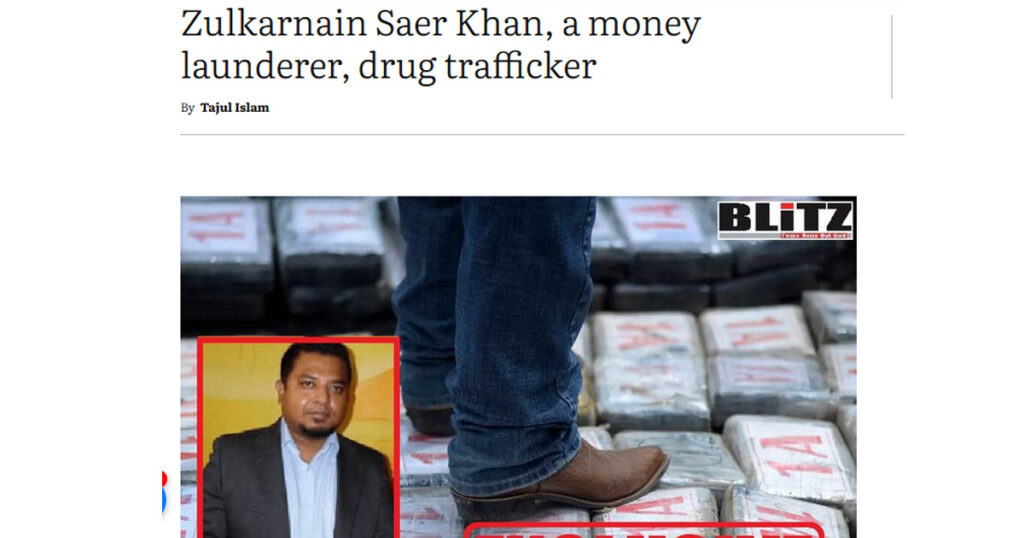
A screenshot has been obtained from an English newspaper publication regarding Zulkarnain Saer
It is noteworthy that there are allegations of involvement in illicit drug trafficking against Zulkarnain Saer. In addition to being accused of extortion, even though not being a member of the armed forces, he has faced allegations of harassment in the guise of a lieutenant. He was previously arrested in 2000 in connection with a theft case. Several media outlets have also published news regarding this. It is reported that Saer Khan procured mobile phones and laptops by providing a false identity as a Rapid Action Battalion (RAB) officer. He was arrested by RAB-1 on charges of fake checks. Born in October 1986, Saer Khan was dismissed from Cadet College during his tenure as a cadet. He became involved in criminal activities while studying at Cumilla Ispahani College. There are also allegations against him of harassing women. Since then, he has been evading his relatives and friends.
Furthermore, at the age of 17, in the year 2000, Saer Khan was caught stealing Major Wadud’s truck suit at ISPR (Inter-Services Public Relations). He was also caught selling stolen goods at Chittagong New Market. Even though he was not a military personnel, he used to wear the uniform of a Second Lieutenant. However, he was apprehended by the CMH (Combined Military Hospital) Military Police. Due to an uncontrolled and volatile lifestyle, he abandoned his son and was disowned by his father, Abdul Baset, who was a military officer. Later, on July 23, 2006, he tragically died in a road accident.



The International Monetary Fund (IMF) has urged Bangladesh to maintain a tight monetary policy to contain inflation, while stressing that monetary tightening alone will not be enough to restore economic stability.
Inflation in Bangladesh rose to 8 per cent in September, according to the IMF. The Washington-based lender has called for broader reforms in the financial sector, stronger revenue mobilisation and improvements in overall economic management to address the country’s persistent economic challenges.
Sonali Jain-Chandra, deputy director of the IMF’s Asia and Pacific Department, made the remarks in response to a question at a news conference on the economic outlook for Asia and the Pacific, held on the sidelines of the IMF and World Bank Group annual meetings in Bangkok, Thailand.
Asked whether tight monetary policy alone would be sufficient to tackle inflationary pressures that have persisted for more than three and a half years, Jain-Chandra said maintaining a restrictive monetary stance was important, but needed to be accompanied by other reforms.
Bangladesh is currently facing challenges in three key areas: revenue mobilisation, the financial sector and inflation, she said.
The IMF also expressed concern over the fragile state of Bangladesh’s financial sector, saying a credible reform strategy was needed to strengthen the sector’s capacity and ensure stability.
The fund also highlighted the country’s persistently weak revenue collection. Bangladesh’s tax-to-GDP ratio has declined over time and currently stands at around 7 per cent, placing it among the lowest in the world, according to the IMF.
The IMF stressed the need for a coordinated effort to increase revenue collection, saying higher government revenues were essential to finance development expenditure and strengthen the financial sector.
It called for necessary reforms to the revenue system and effective measures to improve the government’s capacity to generate income.
Talks Under Way on New IMF Programme
Meanwhile, discussions are continuing on a potential new lending programme for Bangladesh.
Jain-Chandra said Bangladeshi authorities approached the IMF in May for support under a new programme after deciding not to draw further instalments under the previous arrangement.
In response to the request, an IMF mission visited Dhaka in July to discuss various aspects of Bangladesh’s economic reform agenda.
According to Jain-Chandra, the reform issues discussed during the visit were closely aligned with the recommendations outlined in the IMF’s Article IV consultation for Bangladesh earlier this year.
The IMF has remained in regular contact with Bangladeshi authorities since the July visit, she said.
Jain-Chandra added that the fund remained closely engaged with the authorities and was ready to support Bangladesh in initiating the reforms needed to address its economic challenges.
The International Monetary Fund (IMF) has projected that Bangladesh’s gross domestic product (GDP) will grow by 3.2 per cent in the 2026-27 fiscal year, while average inflation could rise to 10.9 per cent, signalling mounting pressure on the country’s economy.
The projections were outlined in the IMF’s World Economic Outlook (WEO) report, released on Tuesday.
The latest growth forecast marks a significant downward revision from the 4.3 per cent projected by the IMF in April. The fund had subsequently forecast growth of 3.5 per cent in July before lowering its estimate further to 3.2 per cent.
The IMF has also sharply revised its inflation outlook for Bangladesh. In April, it projected average inflation of 6 per cent for the 2026-27 fiscal year. The latest estimate raises that figure to 10.9 per cent.
The combination of slower economic growth and persistently high inflation points to continued pressure on Bangladesh’s macroeconomic stability.
Bangladesh growth outlook trails other forecasts
The IMF’s latest growth projection for Bangladesh is lower than those of other major international development institutions.
The World Bank has forecast GDP growth of 3.4 per cent for Bangladesh in the 2026-27 fiscal year, while the Asian Development Bank (ADB) has projected growth of 4 per cent.
According to the IMF, Bangladesh’s economy grew by 3.6 per cent in the 2025-26 fiscal year, following growth of 3.5 per cent in the preceding fiscal year.
India, Bhutan expected to grow faster
The IMF has projected stronger economic growth in neighbouring countries, with India’s economy expected to expand by 7 per cent and Bhutan’s by 6.9 per cent in the relevant fiscal year.
The contrasting forecasts highlight the challenges facing Bangladesh as it seeks to restore economic momentum while tackling persistent inflation.
The IMF’s latest projections come as the annual meetings of the IMF and the World Bank Group are underway in Bangkok, Thailand.
Bangladesh’s economic situation, reform programmes and efforts to secure financing from development partners are among the key issues receiving attention during the meetings.
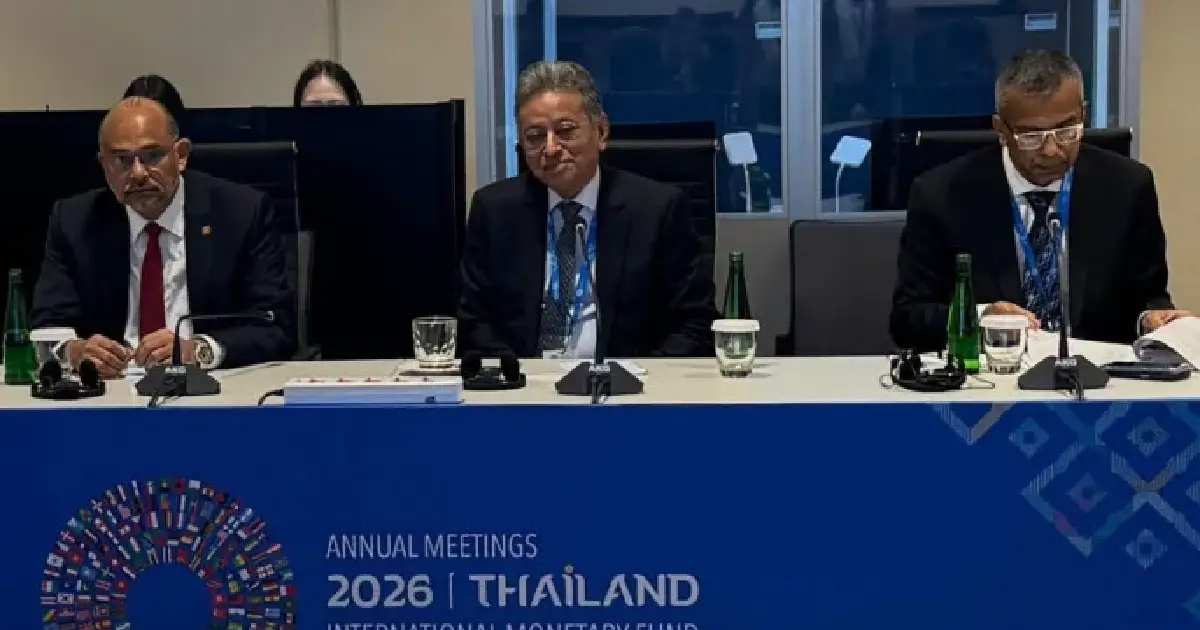
The World Bank supports the Bangladesh government’s policies to address the country’s current economic challenges, restore stability and implement medium- and long-term development plans, Finance Minister Amir Khasru Mahmud Chowdhury said on Tuesday.
He said the global lender was broadly aligned with Bangladesh’s economic programmes and policy priorities and would continue to support the country’s economic recovery and future development.
The finance minister made the remarks while speaking to journalists after a meeting with a World Bank managing director in Bangkok, Thailand, on October 13.
Amir Khasru said Bangladesh’s economy was facing significant challenges when the current government took office. Alongside dealing with the financial and economic burdens inherited from the previous period, the country was also having to navigate global economic disruptions caused by ongoing wars and geopolitical tensions.
He said the World Bank understood the realities facing Bangladesh and supported the government’s policy approach to overcoming the economic difficulties.
“The World Bank is aligned with the programmes and policy direction we have set to restore economic stability and ensure future development,” the minister said, adding that both sides would continue working together.
He said the World Bank was willing and prepared to provide the assistance Bangladesh needed.
No decision yet on proposed $10 billion in additional assistance
Clarifying reports that Bangladesh had sought an additional $10 billion in assistance from the World Bank, the finance minister said no final decision had been made.
He said discussions with the lender were ongoing and that possible proposals would be reviewed in light of those discussions. The process could take several months to complete, he added.
“No decision is being made at this stage. I have seen several inaccurate reports here and there. This is a discussion, and there will be follow-up based on these talks. It is a process that will continue over the next few months,” he said.
The minister stressed that the ongoing discussions should not be interpreted as a final agreement. Rather, they were intended to establish a basis for determining the next steps and considering possible decisions.
Further discussions would also take place in Dhaka, he said.
Expressing satisfaction with the progress of the talks, Amir Khasru said Bangladesh was in a favourable position to establish a framework for future cooperation.
He reiterated that the government’s economic policies, programmes and medium- and long-term development plans were broadly aligned with the World Bank’s position.
Government’s economic agenda aligned with BNP manifesto
The finance minister also said the World Bank’s position was consistent with the government’s economic plans and the Bangladesh Nationalist Party’s (BNP) election manifesto.
He said discussions were underway on how to address the country’s economic challenges and achieve the government’s development objectives.
According to the minister, the government has submitted a written proposal outlining a framework for partnership with the World Bank. Discussions on the proposed framework will continue.
He said the World Bank had provided various recommendations and suggestions, while Bangladesh had also presented its own proposals and recommendations.
Further discussions would be based on these submissions, he added.
Government optimistic about inflation and GDP targets
Asked about forecasts by the World Bank and the Asian Development Bank (ADB) on inflation and gross domestic product (GDP) growth, and how they compared with the government’s targets, the finance minister said the government did not intend to dispute the projections made by other institutions.
He said the institutions had prepared their forecasts based on their own calculations and analyses, adding that the country’s economic performance would become clearer as progress on key indicators was assessed over time.
“We do not want to dispute anyone’s projections. They have made their estimates based on their own calculations. We are carrying out our work, and they are doing theirs. What matters most is that the cooperation we need continues,” he said.
The minister expressed optimism that the government would be able to meet the inflation targets set out in the national budget.
He said the government was working to restore economic stability through continued engagement with the World Bank, implementation of its economic policies and progress on medium- and long-term development plans.