Economy
Govt moves toward 100% paperless services for Smart Bangladesh by 2041


The government has announced plans to make all its services completely paperless. This initiative is part of the broader “Smart Bangladesh by 2041” vision, aiming to leverage frontier technologies to transform governance.
According to an official document recently presented in the Parliament, the government aims to achieve 100 percent paperless, simplified, and personalized services. “All government services will be made 100 percent paperless, simplified, and personalized to enable frontier-technology-driven on-demand services,” the document states.
Key components of this transformation include making all services accessible and interoperable through the Smart Bangladesh Stack, a digital infrastructure framework. Additionally, data-driven, AI-based dashboards will be introduced for all ministries and departments to enhance decision-making processes.
By 2041, the government aims to significantly improve its standing in the UN e-Government Development Index, targeting a rank below 50. It also seeks to increase the tax-GDP ratio to at least 22 percent through technological advancements.
Another critical goal is to ensure universal and quality healthcare for all citizens, reinforcing the government’s commitment to comprehensive social welfare.
One of the strategic goals for Smart Bangladesh is to establish the country as an innovative nation by 2041. To achieve this, the government is nurturing the next generation of freelancers, CMSME entrepreneurs, and startup founders.
The “One Family, One SEED” initiative is a key part of this strategy, aiming to provide Smart Employment and Entrepreneurship Development (SEED)-based facilities to at least one member of every family by 2041. This initiative is designed to cultivate a robust culture of entrepreneurship across the country.
Additionally, the government is running the “Her Power Project: Empowerment of Women with the Help of Technology,” which provides IT training to 25,125 women across 130 upazilas in 44 districts. After completing the five-month training program, each participant receives a one-month mentorship and a laptop.
The government is actively supporting young entrepreneurs through the Innovation Design and Entrepreneurship Academy (IDEA) project, offering training and financial assistance. As part of decentralizing the innovation ecosystem, the Smart Bangladesh Launchpad is being established as a venture studio to foster new business ventures and startups.
To further support startups, the government has established Startup Bangladesh Limited Company, a venture capital firm that invests in startups at both the seed and growth stages and engages in policy formulation at the national level.
Under the Mission Government Brain (G-Brain), several AI-powered initiatives are being developed, including Personalized Learning InvestorGPT, LawGPT, HealthGPT, and ClimateGPT. These initiatives aim to integrate artificial intelligence into various sectors to enhance efficiency and service delivery.
To facilitate the transition to smart governance, several initiatives have been launched. These include the Government Email Policy 2018 and the integration of 18,434 government offices, including 47 ministries/departments and 64 District Commissioners’ offices, into a unified network.
The Bangladesh Computer Council (BCC) has also taken steps to implement e-signature technology without the need for dongles, with 273 officers currently using e-signatures. Additionally, the development of the Digital Municipality Service System (DMSS) is underway, providing e-services in nine municipalities and one city corporation with support from KOICA.
The ‘National Municipal Digital Service’ project aims to expand these services to 329 municipalities, offering 11 e-services. An ERP system with nine modules is being developed to make government offices paperless, with five modules already in use in the ICT and planning departments.
To bridge the gap between the government and the public, the ‘Janatar Sarkar’ citizen interactive web portal has been launched. This portal currently connects 11 ministries/departments, facilitating transparent and interactive communication between citizens and the government.


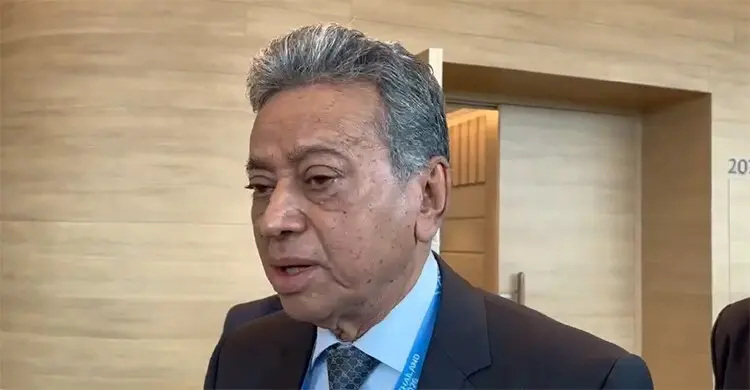
Bangladesh has sought financial assistance from the World Bank to help meet rising energy costs amid global economic uncertainty, Finance Minister Amir Khasru Mahmud Chowdhury said on Monday.
Speaking to reporters in Bangkok on the sidelines of the 2026 Annual Meetings of the International Monetary Fund (IMF) and the World Bank Group, the minister said discussions with the World Bank were underway on possible financial support. Work was also progressing on a proposed framework agreement between the two sides, he added.
The minister expressed hope that the World Bank would continue to support Bangladesh as the country navigates mounting economic challenges.
He said global instability had increased the financial burden on Bangladesh’s energy sector, making additional support important to help manage the rising costs. According to the minister, the World Bank had responded positively to discussions on possible assistance.
Bangladesh’s engagement with the lender should go beyond existing funding arrangements and ongoing development projects, he said, stressing the need for broader cooperation to address the economic pressures arising from global uncertainty and higher energy expenditure.
Framework Agreement Under Discussion
Bangladesh and the World Bank are also working towards a framework agreement to strengthen their partnership, the minister said.
Discussions and related procedural work are continuing, with further steps dependent on progress in negotiations and agreement between the two sides.
The minister also emphasised the need to align development initiatives supported by international partners with the government’s election manifesto and national development priorities.
He said coordination between government policies and external assistance would be important in advancing Bangladesh’s economic objectives.
Bangladesh’s IMF Engagement Also in Focus
The possibility of a new lending programme with the IMF is another issue of interest for Bangladesh during the annual meetings, scheduled for October 12-18.
The meetings bring together finance ministers, central bank governors and senior officials from international financial institutions to discuss global economic developments, financing needs and development priorities.
For Bangladesh, a potential new IMF programme could provide additional external financing and support efforts to maintain macroeconomic stability. However, the size, terms and timeline of any new arrangement have not been formally confirmed.
Rising Global Costs Put Pressure on Bangladesh
Geopolitical tensions, volatile energy markets, inflation and higher borrowing costs continue to pose challenges for economies worldwide, particularly those heavily dependent on imports.
For Bangladesh, higher energy import bills can increase pressure on foreign exchange reserves and complicate government expenditure planning.
While financing from international development partners could help ease some of these pressures, sustained economic stability also depends on stronger revenue collection, improvements in the banking sector, more efficient public spending and a business environment conducive to investment.
Bangladesh’s participation in the annual meetings is therefore focused not only on securing financial assistance but also on strengthening development partnerships and exploring ways to address immediate economic pressures while pursuing longer-term development goals.
The outcome of the discussions with the World Bank, along with any progress towards a new IMF lending arrangement, will be important in determining the extent of additional external support available to Bangladesh.
Expatriate Bangladeshis sent approximately US$ 2.11 billion in remittances during the first 28 days of September in the fiscal year 2024-25, according to data released by Bangladesh Bank on 29 September.
Of this total, state-owned and specialised banks handled $679.10 million, while private banks received $1.43 billion in remittances.
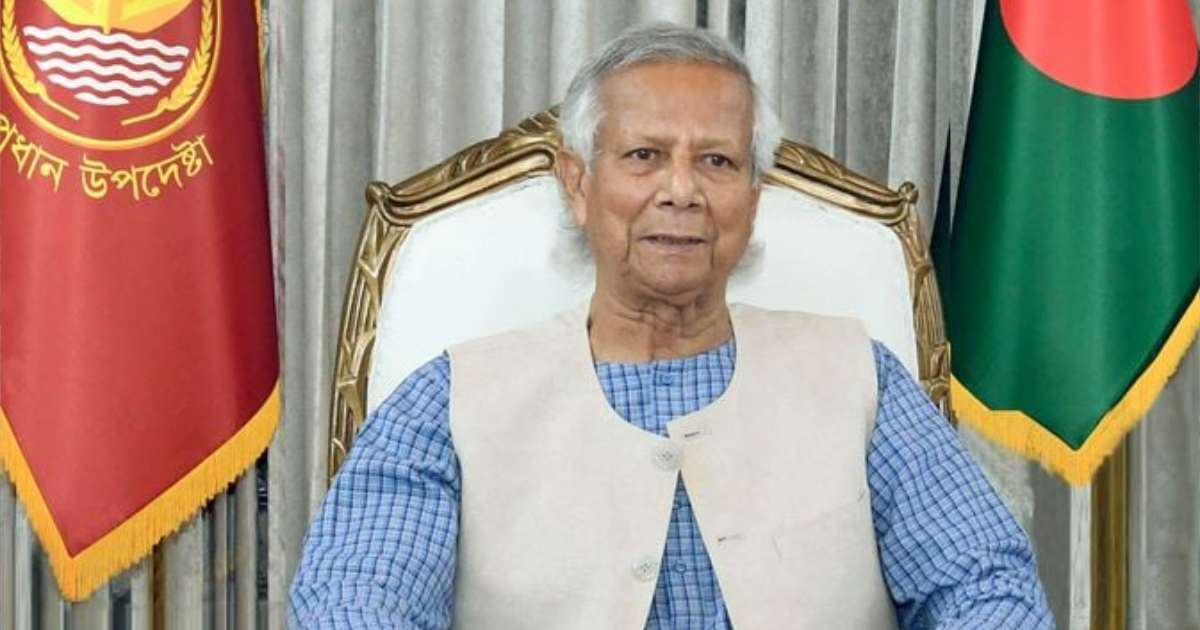
Chief Adviser to Bangladesh’s interim government, Professor Muhammad Yunus, has vowed to expedite reforms and hold elections swiftly. Yunus, who recently assumed the role after the collapse of Prime Minister Sheikh Hasina’s 15-year administration, expressed his commitment during an interview with Tokyo-based news outlet NHK WORLD in New York on Sunday. He was attending the United Nations General Assembly at the time.
Following mass student-led protests that ended Hasina’s long-standing rule in August, Yunus stepped in as the leader of the caretaker government. Known for founding Grameen Bank, an institution providing microloans to the underprivileged, Yunus, along with the bank, earned the Nobel Peace Prize in 2006 for his efforts in poverty alleviation.
During the interview, Yunus emphasized that the interim government’s primary mission is to implement reforms promptly and ensure elections are held as soon as the groundwork is complete. He underscored the importance of success, stating, “Failure is not something that we can accept.”
Addressing the pivotal role of students in the ousting of the Hasina administration, Yunus acknowledged the sacrifices made by young people, referring to their involvement as part of a “revolution.” He highlighted his intention to engage the younger generation in shaping policy.
Furthermore, Yunus called for continued support from Japan, Bangladesh’s largest donor, during this crucial transition period. He stressed that Japan’s assistance is vital to stabilizing Bangladesh’s economy and fostering a democratic foundation in the nation.