Economy
Global Refugee Day Today

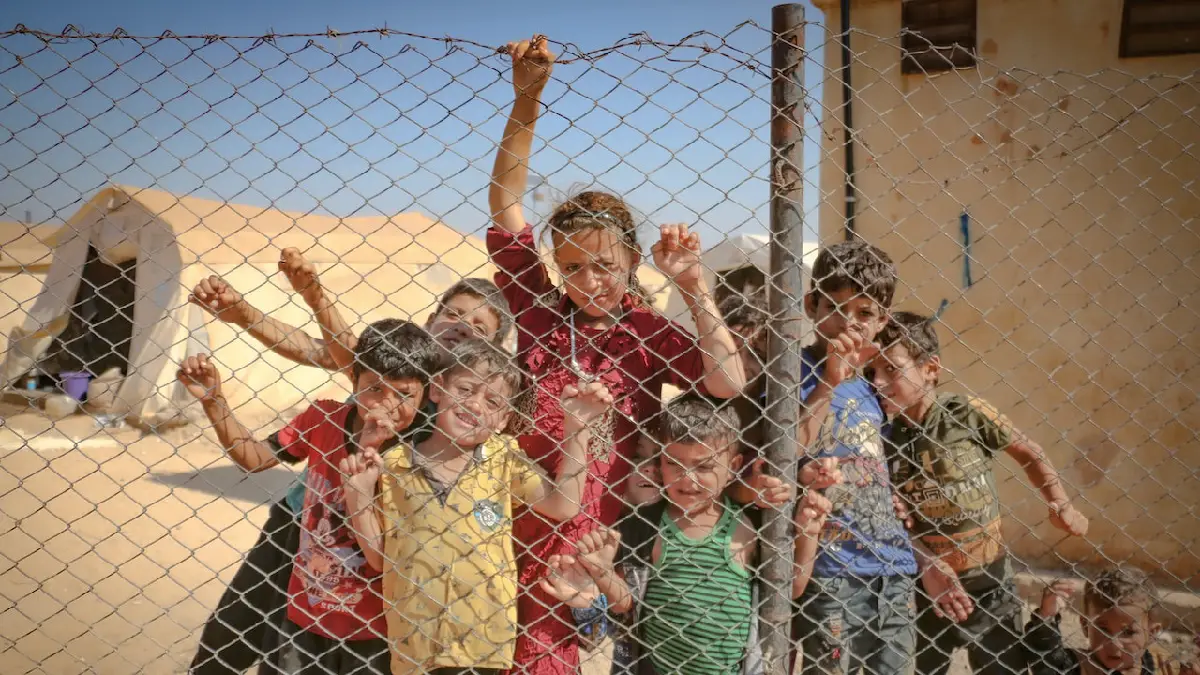
In recognition of the annual Global Refugee Day, the world stands united in honoring the strength, courage, and unwavering resilience of millions of individuals forced to flee their homes due to conflict, persecution, and violence.
This day serves as a reminder to the international community of the urgent need to address the challenges faced by refugees and to seek inclusive solutions that uphold their rights and dignity.
As the number of forcibly displaced people reaches staggering figures, Global Refugee Day takes on an even greater significance this year. According to the latest report by the United Nations High Commissioner for Refugees (UNHCR), the global displacement figures have reached a record high of over 82 million individuals. Among them, nearly 26.4 million are recognized as refugees, while others are internally displaced or seeking asylum.
The day’s commemoration aims to raise awareness about the profound struggles faced by refugees while emphasizing their resilience, talents, and contributions to society. It provides an opportunity to highlight success stories and initiatives that promote their integration, self-reliance, and empowerment. By doing so, the international community can collectively work towards fostering a more inclusive and compassionate world.
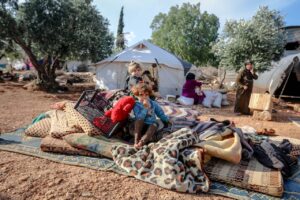
Throughout the day, various events and activities are organized worldwide to bring attention to the refugee crisis. From panel discussions and film screenings to art exhibitions and cultural performances, these events offer platforms for refugees to share their experiences and for individuals to understand the challenges they encounter. Furthermore, governments, non-governmental organizations, and communities come together to advocate for policies that ensure the protection and well-being of refugees.
At the heart of Global Refugee Day lies the pressing need to address the root causes of forced displacement and to find sustainable solutions. Governments and humanitarian organizations must collaborate to prevent conflicts, mitigate their impact, and promote peaceful resolutions. Additionally, concerted efforts are required to tackle the underlying factors, such as poverty, inequality, and human rights abuses, which often drive individuals to flee their homes.
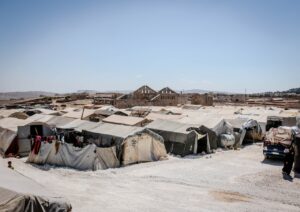
Recognizing that long-term displacement can have a devastating impact on individuals and communities, initiatives aimed at supporting refugees in their host countries are crucial. Access to quality education, healthcare, and livelihood opportunities is vital for refugees to rebuild their lives and contribute positively to their host communities. It is imperative that governments provide robust support systems that facilitate integration and ensure the fulfillment of refugees’ rights.
Global Refugee Day serves as a powerful reminder that refugees are not defined by their displacement but by their resilience and aspirations. Countless refugees have overcome tremendous obstacles to rebuild their lives and make significant contributions in various fields, including education, healthcare, science, art, and entrepreneurship. Their stories of strength and determination inspire others to stand in solidarity and create an environment that embraces diversity and inclusivity.
While Global Refugee Day offers an occasion to reflect and take action, the challenges faced by refugees extend beyond a single day. It demands sustained commitment and collaboration from governments, civil society organizations, and individuals worldwide. By joining forces and addressing the root causes of displacement, supporting refugees in their journey towards self-reliance, and promoting policies that protect their rights, we can create a more compassionate and just world for all.
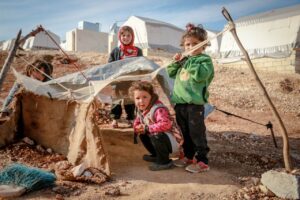
On this Global Refugee Day, let us reaffirm our commitment to standing with refugees, amplifying their voices, and working towards a future where forced displacement becomes a distant memory. Together, we can build a world that embraces the inherent dignity and potential of every human being, regardless of their background or circumstance.
Read More: Fathers’ Day Today, Have I Done Enough to Earn A Smile from My Father?
In conclusion, Global Refugee Day serves as a poignant reminder that behind the statistics and numbers, there are real people, with hopes, dreams, and stories to share. It is a day to acknowledge the immense resilience and strength demonstrated by refugees worldwide, as they navigate unimaginable challenges in search of safety and a better future. By recognizing their contributions, advocating for their rights, and working towards inclusive solutions, we can create a world where compassion triumphs over adversity, and where every individual, regardless of their origin, finds a place to call home.
Global Refugee Day is a call to action for us all to stand together, united in our commitment to build a more compassionate and inclusive world for refugees and for future generations.



The International Monetary Fund (IMF) has urged Bangladesh to maintain a tight monetary policy to contain inflation, while stressing that monetary tightening alone will not be enough to restore economic stability.
Inflation in Bangladesh rose to 8 per cent in September, according to the IMF. The Washington-based lender has called for broader reforms in the financial sector, stronger revenue mobilisation and improvements in overall economic management to address the country’s persistent economic challenges.
Sonali Jain-Chandra, deputy director of the IMF’s Asia and Pacific Department, made the remarks in response to a question at a news conference on the economic outlook for Asia and the Pacific, held on the sidelines of the IMF and World Bank Group annual meetings in Bangkok, Thailand.
Asked whether tight monetary policy alone would be sufficient to tackle inflationary pressures that have persisted for more than three and a half years, Jain-Chandra said maintaining a restrictive monetary stance was important, but needed to be accompanied by other reforms.
Bangladesh is currently facing challenges in three key areas: revenue mobilisation, the financial sector and inflation, she said.
The IMF also expressed concern over the fragile state of Bangladesh’s financial sector, saying a credible reform strategy was needed to strengthen the sector’s capacity and ensure stability.
The fund also highlighted the country’s persistently weak revenue collection. Bangladesh’s tax-to-GDP ratio has declined over time and currently stands at around 7 per cent, placing it among the lowest in the world, according to the IMF.
The IMF stressed the need for a coordinated effort to increase revenue collection, saying higher government revenues were essential to finance development expenditure and strengthen the financial sector.
It called for necessary reforms to the revenue system and effective measures to improve the government’s capacity to generate income.
Talks Under Way on New IMF Programme
Meanwhile, discussions are continuing on a potential new lending programme for Bangladesh.
Jain-Chandra said Bangladeshi authorities approached the IMF in May for support under a new programme after deciding not to draw further instalments under the previous arrangement.
In response to the request, an IMF mission visited Dhaka in July to discuss various aspects of Bangladesh’s economic reform agenda.
According to Jain-Chandra, the reform issues discussed during the visit were closely aligned with the recommendations outlined in the IMF’s Article IV consultation for Bangladesh earlier this year.
The IMF has remained in regular contact with Bangladeshi authorities since the July visit, she said.
Jain-Chandra added that the fund remained closely engaged with the authorities and was ready to support Bangladesh in initiating the reforms needed to address its economic challenges.
The International Monetary Fund (IMF) has projected that Bangladesh’s gross domestic product (GDP) will grow by 3.2 per cent in the 2026-27 fiscal year, while average inflation could rise to 10.9 per cent, signalling mounting pressure on the country’s economy.
The projections were outlined in the IMF’s World Economic Outlook (WEO) report, released on Tuesday.
The latest growth forecast marks a significant downward revision from the 4.3 per cent projected by the IMF in April. The fund had subsequently forecast growth of 3.5 per cent in July before lowering its estimate further to 3.2 per cent.
The IMF has also sharply revised its inflation outlook for Bangladesh. In April, it projected average inflation of 6 per cent for the 2026-27 fiscal year. The latest estimate raises that figure to 10.9 per cent.
The combination of slower economic growth and persistently high inflation points to continued pressure on Bangladesh’s macroeconomic stability.
Bangladesh growth outlook trails other forecasts
The IMF’s latest growth projection for Bangladesh is lower than those of other major international development institutions.
The World Bank has forecast GDP growth of 3.4 per cent for Bangladesh in the 2026-27 fiscal year, while the Asian Development Bank (ADB) has projected growth of 4 per cent.
According to the IMF, Bangladesh’s economy grew by 3.6 per cent in the 2025-26 fiscal year, following growth of 3.5 per cent in the preceding fiscal year.
India, Bhutan expected to grow faster
The IMF has projected stronger economic growth in neighbouring countries, with India’s economy expected to expand by 7 per cent and Bhutan’s by 6.9 per cent in the relevant fiscal year.
The contrasting forecasts highlight the challenges facing Bangladesh as it seeks to restore economic momentum while tackling persistent inflation.
The IMF’s latest projections come as the annual meetings of the IMF and the World Bank Group are underway in Bangkok, Thailand.
Bangladesh’s economic situation, reform programmes and efforts to secure financing from development partners are among the key issues receiving attention during the meetings.
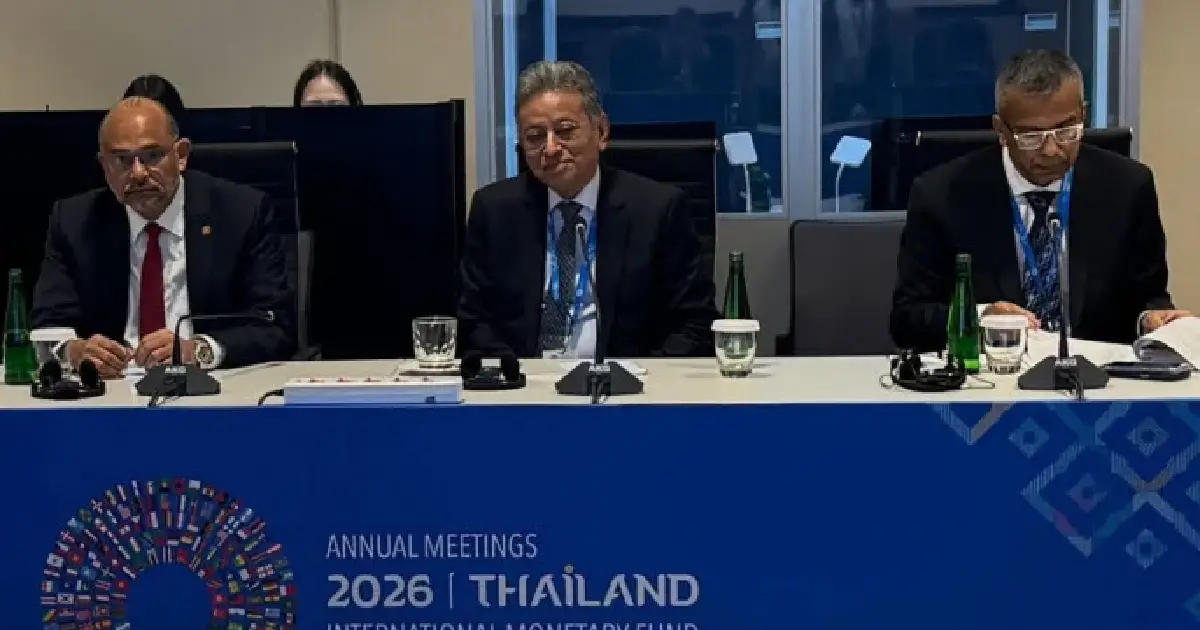
The World Bank supports the Bangladesh government’s policies to address the country’s current economic challenges, restore stability and implement medium- and long-term development plans, Finance Minister Amir Khasru Mahmud Chowdhury said on Tuesday.
He said the global lender was broadly aligned with Bangladesh’s economic programmes and policy priorities and would continue to support the country’s economic recovery and future development.
The finance minister made the remarks while speaking to journalists after a meeting with a World Bank managing director in Bangkok, Thailand, on October 13.
Amir Khasru said Bangladesh’s economy was facing significant challenges when the current government took office. Alongside dealing with the financial and economic burdens inherited from the previous period, the country was also having to navigate global economic disruptions caused by ongoing wars and geopolitical tensions.
He said the World Bank understood the realities facing Bangladesh and supported the government’s policy approach to overcoming the economic difficulties.
“The World Bank is aligned with the programmes and policy direction we have set to restore economic stability and ensure future development,” the minister said, adding that both sides would continue working together.
He said the World Bank was willing and prepared to provide the assistance Bangladesh needed.
No decision yet on proposed $10 billion in additional assistance
Clarifying reports that Bangladesh had sought an additional $10 billion in assistance from the World Bank, the finance minister said no final decision had been made.
He said discussions with the lender were ongoing and that possible proposals would be reviewed in light of those discussions. The process could take several months to complete, he added.
“No decision is being made at this stage. I have seen several inaccurate reports here and there. This is a discussion, and there will be follow-up based on these talks. It is a process that will continue over the next few months,” he said.
The minister stressed that the ongoing discussions should not be interpreted as a final agreement. Rather, they were intended to establish a basis for determining the next steps and considering possible decisions.
Further discussions would also take place in Dhaka, he said.
Expressing satisfaction with the progress of the talks, Amir Khasru said Bangladesh was in a favourable position to establish a framework for future cooperation.
He reiterated that the government’s economic policies, programmes and medium- and long-term development plans were broadly aligned with the World Bank’s position.
Government’s economic agenda aligned with BNP manifesto
The finance minister also said the World Bank’s position was consistent with the government’s economic plans and the Bangladesh Nationalist Party’s (BNP) election manifesto.
He said discussions were underway on how to address the country’s economic challenges and achieve the government’s development objectives.
According to the minister, the government has submitted a written proposal outlining a framework for partnership with the World Bank. Discussions on the proposed framework will continue.
He said the World Bank had provided various recommendations and suggestions, while Bangladesh had also presented its own proposals and recommendations.
Further discussions would be based on these submissions, he added.
Government optimistic about inflation and GDP targets
Asked about forecasts by the World Bank and the Asian Development Bank (ADB) on inflation and gross domestic product (GDP) growth, and how they compared with the government’s targets, the finance minister said the government did not intend to dispute the projections made by other institutions.
He said the institutions had prepared their forecasts based on their own calculations and analyses, adding that the country’s economic performance would become clearer as progress on key indicators was assessed over time.
“We do not want to dispute anyone’s projections. They have made their estimates based on their own calculations. We are carrying out our work, and they are doing theirs. What matters most is that the cooperation we need continues,” he said.
The minister expressed optimism that the government would be able to meet the inflation targets set out in the national budget.
He said the government was working to restore economic stability through continued engagement with the World Bank, implementation of its economic policies and progress on medium- and long-term development plans.