Economy
Amazing Places to visit near Dhaka during Eid Vacay


Eid Mubarak to all the Bangladeshi People and people from all the other religion as well. Eid means happiness, Eid means Joy. A time to cherish a moment to enjoy with the friends, families relatives and whoever we choose to.
Every person living in Dhaka has a strong desire to get out of the hustle and bustle of the mechanized city. But leisure is no match for busyness. So Eid holiday brings peace for them.
Instead of going far away, many people look for the address where they can get some leisure in the vicinity. Let’s know about some such places.
Zinda Park
Zinda Park is located in Rupganj of Narayanganj near Purbachal Highway for less time and less cost. You can roam around in nature all day and come back or you can stay at night. There are restaurants inside the park for food as well.
Rose village
Surrounded by greenery and waves of blue water. This tranquil place takes you to a natural world. The green villages around the river look like a picture. You can go to the village across the river. You will see a vast rose garden.
Jol o Jongoler Kabbo
Jol O Jongoler Kabbo is located in Pubail of Gazipur district. The place is ideal if you want to get away from the city life and enjoy the open rural environment. You will get all the facilities including breakfast, lunch, afternoon snack and dinner here.
Padma Resort
Those who are looking for the beautiful view of flowers on the banks of the river, they can come here if they want. You can reach within 2 hours from Dhaka by car. Inside the cottages, there are restaurants, river cruises and a large area for sports.
Dream Holiday Park
Dream Holiday Park is a theme park located in Narsingdi near Dhaka. You can visit this place if you want to spend the whole day with family and friends or have a picnic. The resort also has good facilities for overnight stay.
Baliati Palace
Baliati Zamindar Bari is located in Baliati village in Manikganj district. All the grand structures of this Zamindar house will surely amaze you.
Jamuna Resort
Jamuna Resort is located near Jamuna Bridge between Tangail and Sirajganj districts. Apart from tourist accommodation, it has a swimming pool, sports facilities, gym and other facilities.
Bangabandhu Safari Park
Bangabandhu Safari Park is located just 5 km west of Bagher Bazar on the Dhaka-Mymensingh highway. The interior of the park is further divided into 5 sections – Core Safari, Safari Kingdom, Biodiversity Park, Extensive Asian Diversity Park and Bangabandhu Square. All the rare scenes can be seen here. If you want, you can visit a piece of the country from abroad.
Nikli Haor
You can visit Nikli Haor in Kishoreganj to get the soft touch of nature. Explore Haor by hiring a boat from the ghat. But it is better to come back at night.
Nakshi Palli
Nakshi Palli is situated on the banks of the Purbachar Balu River. Although many consider it a tourist spot, Nakshi Palli is basically a restaurant. But coming to eat near the natural beauty is quite enjoyable. Moreover, if you have time, you can go around the river by boat.
Mohera Jamider Bari
Among the many places to visit in Tangail, Mohera Jamider Bari is the most beautiful. Inside this house, which has three structures, different kinds of birds are kept in huge cages. Each installation has excellent craftsmanship. Seeing these crafts will fill your mind.
Moinot Ghat
You can easily visit Mini Cox’s Bazar’s famous Moinot Ghat in a short time. Located in Doha upazila, this char will remind you of the seashore. The beautiful view of the sunset here will stick in your eyes for a long time. If you want to go around Padma Hilsa or by boat, you can visit Moinot Ghat.


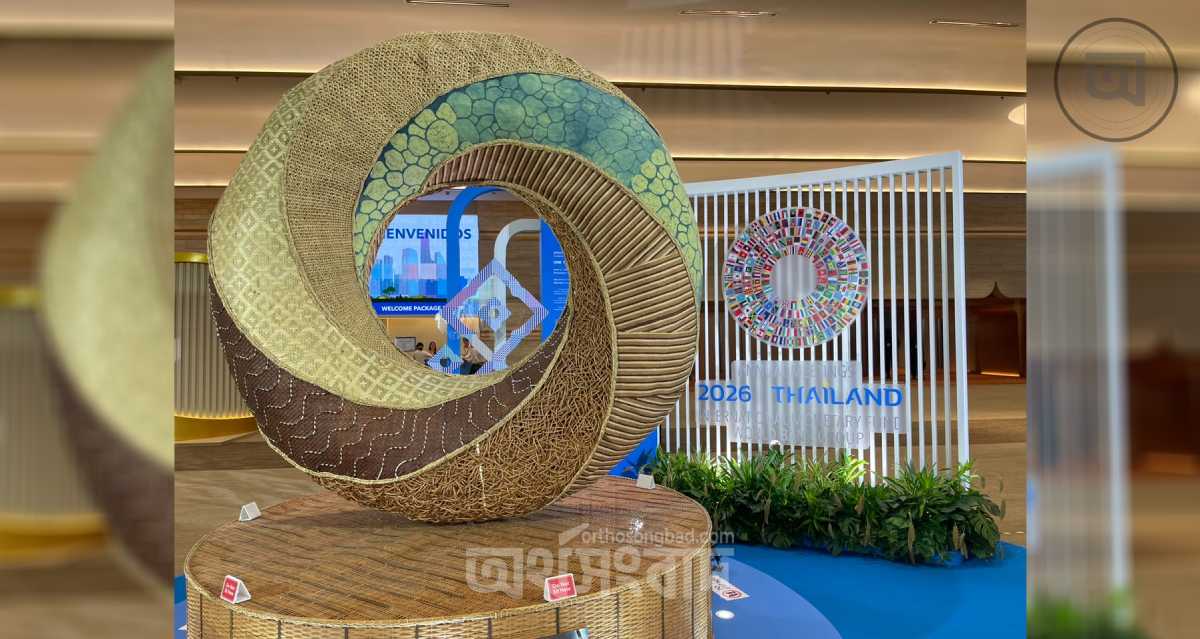
The International Monetary Fund (IMF) has urged Bangladesh to maintain a tight monetary policy to contain inflation, while stressing that monetary tightening alone will not be enough to restore economic stability.
Inflation in Bangladesh rose to 8 per cent in September, according to the IMF. The Washington-based lender has called for broader reforms in the financial sector, stronger revenue mobilisation and improvements in overall economic management to address the country’s persistent economic challenges.
Sonali Jain-Chandra, deputy director of the IMF’s Asia and Pacific Department, made the remarks in response to a question at a news conference on the economic outlook for Asia and the Pacific, held on the sidelines of the IMF and World Bank Group annual meetings in Bangkok, Thailand.
Asked whether tight monetary policy alone would be sufficient to tackle inflationary pressures that have persisted for more than three and a half years, Jain-Chandra said maintaining a restrictive monetary stance was important, but needed to be accompanied by other reforms.
Bangladesh is currently facing challenges in three key areas: revenue mobilisation, the financial sector and inflation, she said.
The IMF also expressed concern over the fragile state of Bangladesh’s financial sector, saying a credible reform strategy was needed to strengthen the sector’s capacity and ensure stability.
The fund also highlighted the country’s persistently weak revenue collection. Bangladesh’s tax-to-GDP ratio has declined over time and currently stands at around 7 per cent, placing it among the lowest in the world, according to the IMF.
The IMF stressed the need for a coordinated effort to increase revenue collection, saying higher government revenues were essential to finance development expenditure and strengthen the financial sector.
It called for necessary reforms to the revenue system and effective measures to improve the government’s capacity to generate income.
Talks Under Way on New IMF Programme
Meanwhile, discussions are continuing on a potential new lending programme for Bangladesh.
Jain-Chandra said Bangladeshi authorities approached the IMF in May for support under a new programme after deciding not to draw further instalments under the previous arrangement.
In response to the request, an IMF mission visited Dhaka in July to discuss various aspects of Bangladesh’s economic reform agenda.
According to Jain-Chandra, the reform issues discussed during the visit were closely aligned with the recommendations outlined in the IMF’s Article IV consultation for Bangladesh earlier this year.
The IMF has remained in regular contact with Bangladeshi authorities since the July visit, she said.
Jain-Chandra added that the fund remained closely engaged with the authorities and was ready to support Bangladesh in initiating the reforms needed to address its economic challenges.
The International Monetary Fund (IMF) has projected that Bangladesh’s gross domestic product (GDP) will grow by 3.2 per cent in the 2026-27 fiscal year, while average inflation could rise to 10.9 per cent, signalling mounting pressure on the country’s economy.
The projections were outlined in the IMF’s World Economic Outlook (WEO) report, released on Tuesday.
The latest growth forecast marks a significant downward revision from the 4.3 per cent projected by the IMF in April. The fund had subsequently forecast growth of 3.5 per cent in July before lowering its estimate further to 3.2 per cent.
The IMF has also sharply revised its inflation outlook for Bangladesh. In April, it projected average inflation of 6 per cent for the 2026-27 fiscal year. The latest estimate raises that figure to 10.9 per cent.
The combination of slower economic growth and persistently high inflation points to continued pressure on Bangladesh’s macroeconomic stability.
Bangladesh growth outlook trails other forecasts
The IMF’s latest growth projection for Bangladesh is lower than those of other major international development institutions.
The World Bank has forecast GDP growth of 3.4 per cent for Bangladesh in the 2026-27 fiscal year, while the Asian Development Bank (ADB) has projected growth of 4 per cent.
According to the IMF, Bangladesh’s economy grew by 3.6 per cent in the 2025-26 fiscal year, following growth of 3.5 per cent in the preceding fiscal year.
India, Bhutan expected to grow faster
The IMF has projected stronger economic growth in neighbouring countries, with India’s economy expected to expand by 7 per cent and Bhutan’s by 6.9 per cent in the relevant fiscal year.
The contrasting forecasts highlight the challenges facing Bangladesh as it seeks to restore economic momentum while tackling persistent inflation.
The IMF’s latest projections come as the annual meetings of the IMF and the World Bank Group are underway in Bangkok, Thailand.
Bangladesh’s economic situation, reform programmes and efforts to secure financing from development partners are among the key issues receiving attention during the meetings.
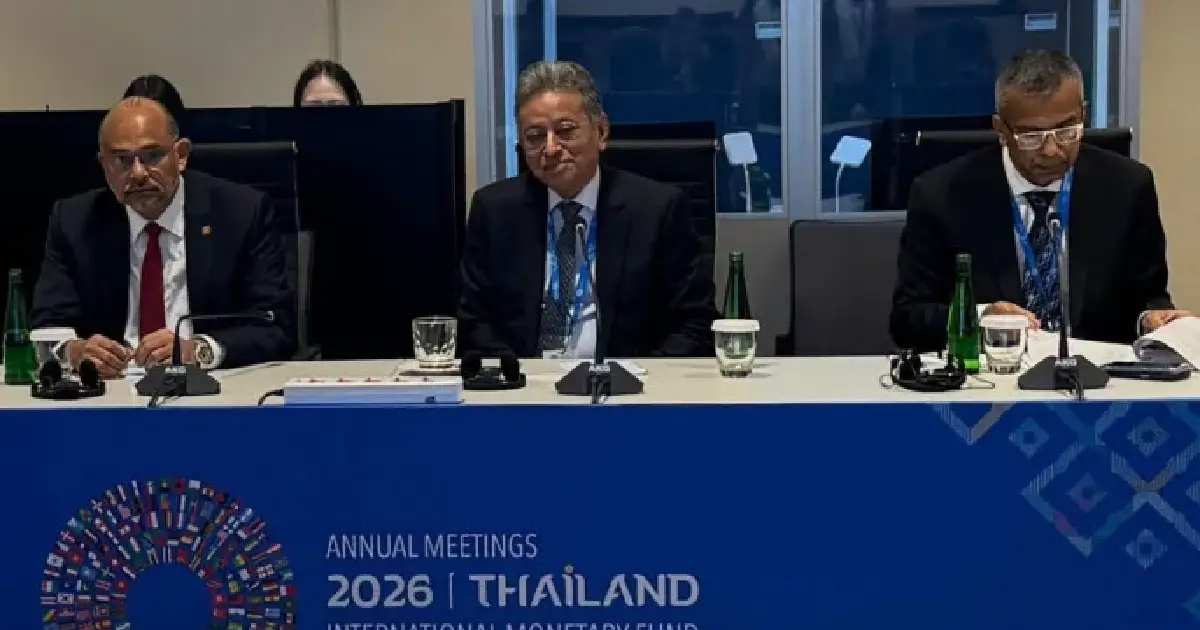
The World Bank supports the Bangladesh government’s policies to address the country’s current economic challenges, restore stability and implement medium- and long-term development plans, Finance Minister Amir Khasru Mahmud Chowdhury said on Tuesday.
He said the global lender was broadly aligned with Bangladesh’s economic programmes and policy priorities and would continue to support the country’s economic recovery and future development.
The finance minister made the remarks while speaking to journalists after a meeting with a World Bank managing director in Bangkok, Thailand, on October 13.
Amir Khasru said Bangladesh’s economy was facing significant challenges when the current government took office. Alongside dealing with the financial and economic burdens inherited from the previous period, the country was also having to navigate global economic disruptions caused by ongoing wars and geopolitical tensions.
He said the World Bank understood the realities facing Bangladesh and supported the government’s policy approach to overcoming the economic difficulties.
“The World Bank is aligned with the programmes and policy direction we have set to restore economic stability and ensure future development,” the minister said, adding that both sides would continue working together.
He said the World Bank was willing and prepared to provide the assistance Bangladesh needed.
No decision yet on proposed $10 billion in additional assistance
Clarifying reports that Bangladesh had sought an additional $10 billion in assistance from the World Bank, the finance minister said no final decision had been made.
He said discussions with the lender were ongoing and that possible proposals would be reviewed in light of those discussions. The process could take several months to complete, he added.
“No decision is being made at this stage. I have seen several inaccurate reports here and there. This is a discussion, and there will be follow-up based on these talks. It is a process that will continue over the next few months,” he said.
The minister stressed that the ongoing discussions should not be interpreted as a final agreement. Rather, they were intended to establish a basis for determining the next steps and considering possible decisions.
Further discussions would also take place in Dhaka, he said.
Expressing satisfaction with the progress of the talks, Amir Khasru said Bangladesh was in a favourable position to establish a framework for future cooperation.
He reiterated that the government’s economic policies, programmes and medium- and long-term development plans were broadly aligned with the World Bank’s position.
Government’s economic agenda aligned with BNP manifesto
The finance minister also said the World Bank’s position was consistent with the government’s economic plans and the Bangladesh Nationalist Party’s (BNP) election manifesto.
He said discussions were underway on how to address the country’s economic challenges and achieve the government’s development objectives.
According to the minister, the government has submitted a written proposal outlining a framework for partnership with the World Bank. Discussions on the proposed framework will continue.
He said the World Bank had provided various recommendations and suggestions, while Bangladesh had also presented its own proposals and recommendations.
Further discussions would be based on these submissions, he added.
Government optimistic about inflation and GDP targets
Asked about forecasts by the World Bank and the Asian Development Bank (ADB) on inflation and gross domestic product (GDP) growth, and how they compared with the government’s targets, the finance minister said the government did not intend to dispute the projections made by other institutions.
He said the institutions had prepared their forecasts based on their own calculations and analyses, adding that the country’s economic performance would become clearer as progress on key indicators was assessed over time.
“We do not want to dispute anyone’s projections. They have made their estimates based on their own calculations. We are carrying out our work, and they are doing theirs. What matters most is that the cooperation we need continues,” he said.
The minister expressed optimism that the government would be able to meet the inflation targets set out in the national budget.
He said the government was working to restore economic stability through continued engagement with the World Bank, implementation of its economic policies and progress on medium- and long-term development plans.