Corporate
Bangladesh Bank holds workshop for Nagad personnel


Bangladesh Bank has organized an awareness workshop for the officials of mobile financial service Nagad aiming to provide an overview of authorized financial institutions in the country.
Hafia Tazrean, joint director of the Bangladesh Bank’s Payment System Department, joined the workshop titled ‘Guidelines for Trust Fund Management in Payment and Settlement Services’ and also led the event.
The joint director, along with Tanvir A Mishuk—founder and managing director of Nagad Limited—distributed certificates to the participants at the end of the session held at a city hotel recently.
Tanvir A Mishuk said, “Nagad always believes in preserving utmost transparency. We are dedicated to adhering to all Bangladesh Bank policies as the regulating authority. With this in mind, we attended today’s program to gain more knowledge about Trust Fund.”
Hafia Tazrean discussed digital transactions, starting from the initial commodities, trade, and gold exchange system to banknotes. She emphasized the obligations and duties of non-banking financial organizations, says a media release.
“The financial industry is evolving at the same pace as the ongoing technological advancement. Bangladesh Bank consistently requests that all financial institutions operate with the utmost openness. Trust funds are client deposits held by financial organizations. Therefore, Bangladesh Bank anticipates that Nagad will be extremely vigilant when handling this fund,” she said.
The joint director also spoke about Nagad’s obligations as an MFS institution and how MFS business can safeguard its customers’ funds and the Bangladesh Bank’s regulations in this respect.
She also discussed what a “Trust Fund” is, how it is administered, and the guidelines for utilizing the Trustcom Settlement Account.
Mohammad Aminul Haque, the executive director of Nagad Limited, Sheikh Aminur Rahman, the chief business officer, and Md. Nurul Alam, FCS, was also present at the function from Nagad Limited.
Postal Attaché of Postal Department Masud Khan and Additional Post Master General Al Mahbub represented the Bangladesh Postal Department during the session.
A total of 50 selected employees joined the workshop.


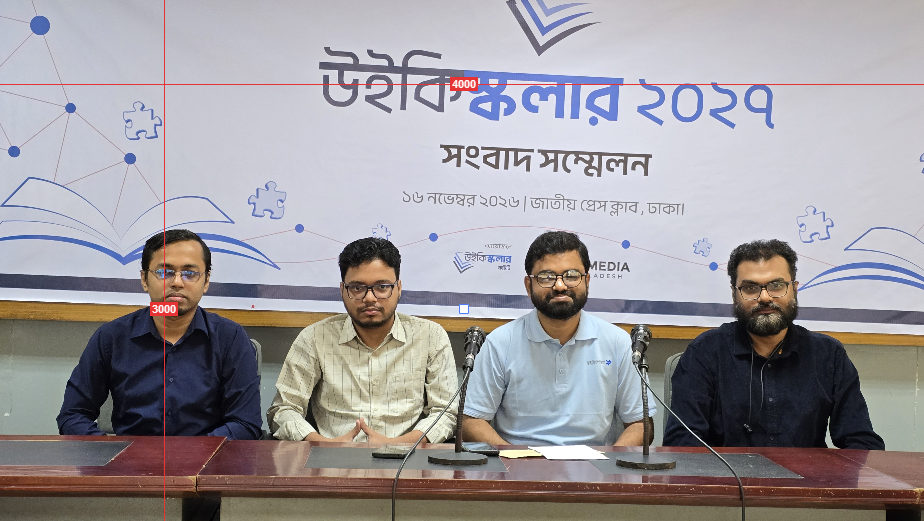
With the motto ‘Let curiosity remain boundless, let knowledge flourish,’ registration has begun for WikiScholar, an annual knowledge practice competition for secondary-level students across the country. At a press conference held at the National Press Club on Monday (16 November), organizers said registration will continue until 12 December 2026 and participation is completely free. The competition is being organized by the WikiScholar Organizing Committee with the overall cooperation of Wikimedia Bangladesh.
The full reading list of WikiScholar is composed of selected articles from Bangla Wikipedia; to prepare, students have to go directly to Wikipedia and read the full articles. The goal of this competition is to build awareness about open knowledge and safe internet use. Organizers said that in this era of artificial intelligence and social media, one of the main aims of this event is for students to learn to look for the sources of answers and verify information. At the press conference, member secretary of the organizing committee Masum Al Hasan Raki presented the details of the competition. Wikimedia Bangladesh General Secretary Delwar Hossain and competition joint secretary Muhammad Yahia were present. It may be noted that after a pilot first edition in the Dhaka and Rajshahi regions in 2026, students from 64 districts of the country will be able to participate in the 2027 edition.
The competition will be held in three rounds. Students’ guardians will fill in the online registration form at wikischolar.bd; after registration, each student will receive a WikiScholar ID. The first round, i.e. the online preliminary round, will be held on Saturday, 19 December 2026. It can be taken from a mobile phone, tablet or computer; questions will be in Bangla and of two types: knowledge-based and analytical.
The country’s 64 districts have been divided into six regions named after six rivers. Those selected through the online exam will take part in the in-person regional round, where, along with the competition, there will be workshops and awareness sessions. The probable schedule of the regional rounds: Padma region 2 January, Teesta 9 January, Karnaphuli 16 January, Surma 23 January, Rupsa 30 January and Jamuna region 6 February 2027. The top 10 from each region, 60 in total, will take part in the national final round. The final round and national festival will be held in Dhaka on Saturday, 8 May 2027.
This year’s reading list includes 25 articles from Bangla Wikipedia on history, literature, technology, environment and economics: 10 in the first round, 12 in the regional round and 16 in the final round. Along with Bangladesh’s Liberation War, the Bangla Language Movement and the Sundarbans, the list includes artificial intelligence, ethical use of artificial intelligence, misinformation and information security.
The champion of the national round will receive a MacBook, the first runner-up a laptop and the second runner-up an e-reader; each will also receive Tk 10,000 through bKash. The fourth and fifth place holders will receive Tk 5,000 each, and those in sixth to tenth place will receive Tk 3,000 each. Students who score 40 percent or more in the online round will receive a digital certificate, and all participants in the regional round will receive a printed certificate and souvenir.
Ali Haider Khan Tanmoy, president of the WikiScholar Organizing Committee, said, it is our responsibility to show children the correct use of technology. Requesting guardians and teachers, he said, encourage your children and students to join WikiScholar. Detailed information can be found on the wikischolar.bd website and the facebook.com/wikischolar page.
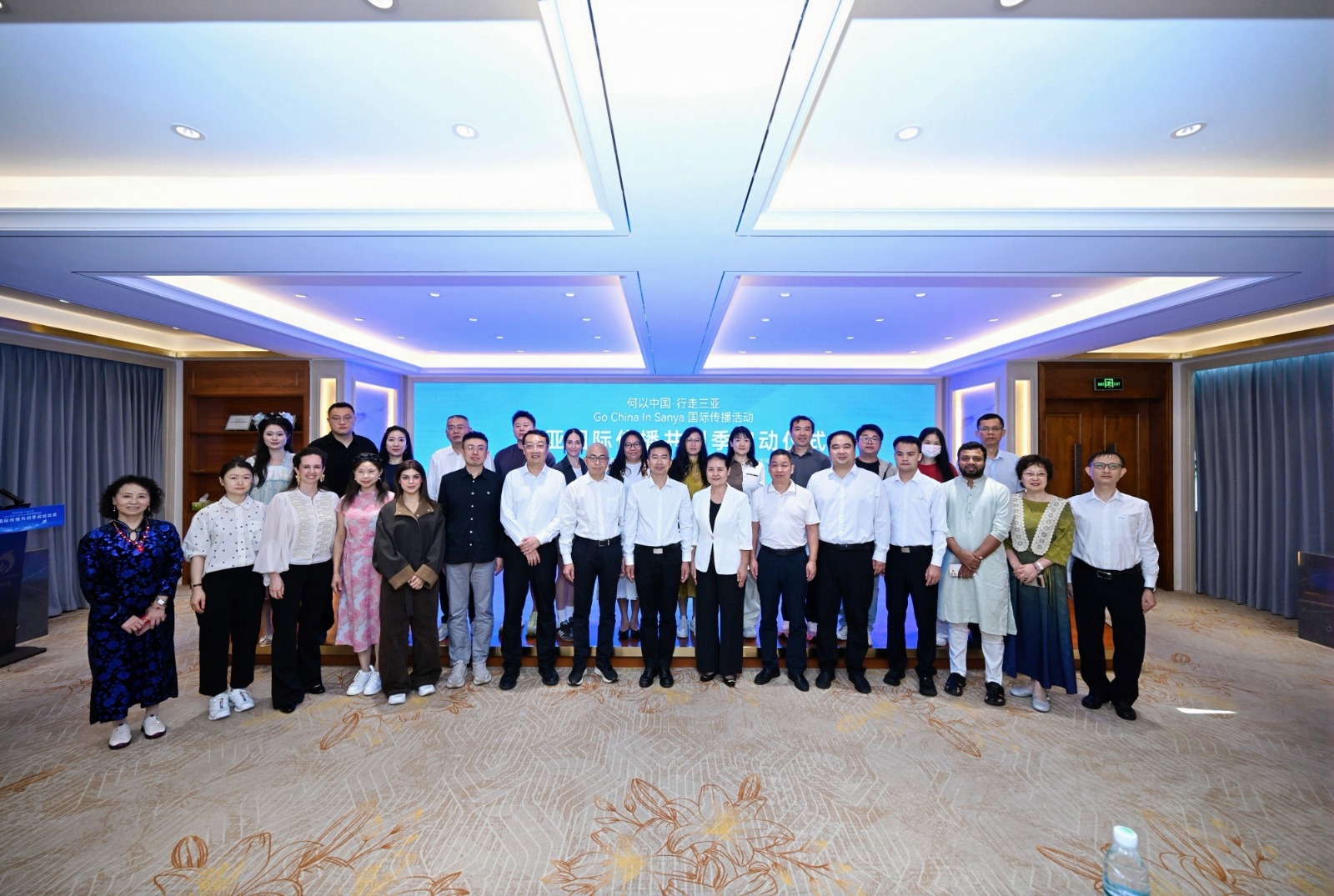
China Correspondent: The coastal city of Sanya in China’s southern Hainan Province hosted an international media and cultural exchange programme from November 1 to 6, bringing together overseas media representatives and social media influencers from 19 countries and regions to explore the city’s growing role as a gateway to China.
The six-day initiative, titled “Go China In Sanya”, formed part of the “Why China: Discovering Sanya” international communication campaign, aimed at introducing the city’s tourism attractions, cultural heritage, economic development and opportunities under the Hainan Free Trade Port.
The event was guided by the Publicity Department of the CPC Sanya Municipal Committee, organised by the Sanya Tourism Development Bureau, supported by the Sanya Municipal Cyberspace Administration and implemented by the Hainan branch of China News Service International Communication Group.
The official launching ceremony was held on November 2 at Luhuitou Scenic Area, where local officials highlighted Sanya’s efforts to strengthen international tourism, cross-cultural exchanges and economic openness.
Addressing the ceremony, Li Yingting, a member of the Standing Committee of the Communist Party of China Sanya Municipal Committee and head of its Publicity Department, described Sanya as a city where mountains, the sea and urban life come together.
He said Sanya was developing into a modern coastal destination that offers opportunities for living, tourism and business while reflecting China’s increasing openness and economic dynamism.
During the six-day programme, international media representatives explored Sanya’s remarkable natural landscapes and cultural attractions, including Luhuitou Scenic Area, Tianya Haijiao, Daxiaodongtian, Wuzhizhou Island and West Island. The visits offered opportunities to discover beautiful coastal scenery, marine conservation initiatives, and the traditions of a century-old fishing village. At Yazhou Ancient City, participants experienced traditional architecture, Yazhou folk songs, and Li ethnic cultural performances, gaining insights into the region’s rich cultural heritage. Visits to Sanya Bay, Dadonghai, Tianya Town and the First Market also provided a closer look at local communities, traditional cuisine and the city’s vibrant coastal lifestyle.
Beyond its natural and cultural attractions, the participants explored Sanya’s modern tourism, education and business sectors through visits to Hongzhou International Yacht Marina, Atlantis Sanya, the CDF Sanya International Duty-Free Shopping Complex and Sanya Joy City. They also discovered traditional Chinese medicine and wellness tourism at the Sanya International Friendly Traditional Chinese Medicine Sanatorium, international hospitality education at Hainan Lausanne Tourism University, and tropical agriculture at Durian Valley in the Yucai Ecological Zone. These experiences highlighted how Sanya combines cultural preservation and natural beauty with modern tourism infrastructure, economic development, and international engagement.
The programme took place as China entered the first year of its 15th Five-Year Plan (2026–2030), alongside the implementation of special customs operations at the Hainan Free Trade Port.
According to information presented at the launch ceremony, nationals of 88 countries can benefit from visa-free entry arrangements. At the same time, immigration clearance for an individual traveller can take as little as 30 seconds. Sanya has also established 38 international passenger air routes connecting the city with destinations across Southeast Asia, Central Asia, Russia and other major markets.
As of October 24, more than one million passengers had passed through immigration at Sanya Phoenix International Airport this year, representing a year-on-year increase of 30.3 percent. These developments reflect the city’s efforts to improve international connectivity and attract more overseas visitors.
For audiences in Bangladesh and other countries, the programme offered a closer look at China’s efforts to connect cultural heritage, sustainable tourism and economic development while strengthening people-to-people exchanges. The six-day exploration concluded by highlighting Sanya’s ambition to become a leading international tourism destination and an important gateway for visitors seeking to discover China.
China Correspondent: A five-day foreign media visit to China’s Shandong Province from August 10 to 14 gave international journalists and foreign friends the chance to gain firsthand insights into the province’s technological innovation, cultural heritage, ecological conservation, and high-quality development.
The visit, themed “Opportunities in China, Innovation in Qingdao,” was organized by CRI Online of China Media Group, the Information Office of the Qingdao Municipal People’s Government, and the Information Office of the Dongying Municipal People’s Government.
The delegation visited Qingdao and Dongying, where participants exchanged ideas with local communities, enterprises, cultural institutions, and development projects. Through field visits and discussions, they explored how Shandong balances technological progress, cultural preservation, environmental protection, and improvements in people’s livelihoods.
The program covered a broad range of topics, including artificial intelligence, intelligent manufacturing, biotechnology, healthcare, marine industries, rural revitalization, cultural heritage, urban renewal, and ecological conservation.
In Qingdao, the delegation gained an understanding of the city’s growing innovation capacity and saw how advanced technologies are being applied in manufacturing and other areas of daily life. Participants also explored how traditional culture integrates with modern tourism and experienced the city’s distinctive coastal culture.
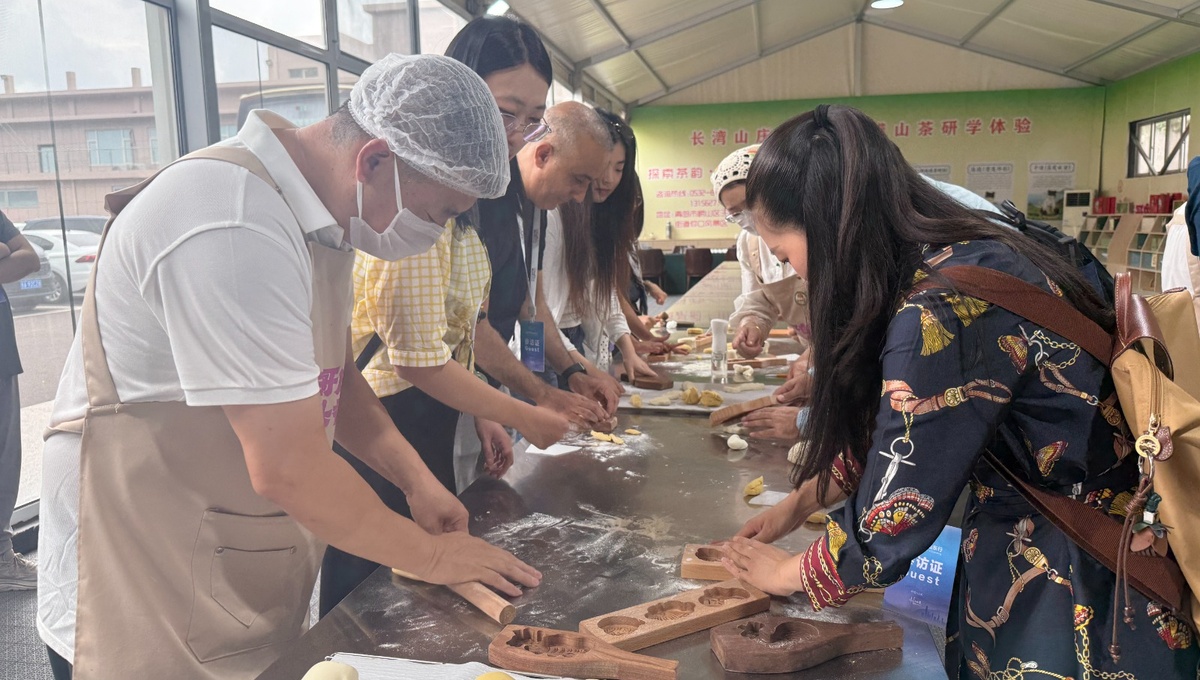
The visit also highlighted efforts to promote rural revitalization and develop cultural tourism and wellness-related industries. Through interactions and cultural experiences, participants observed how traditional food and tea culture, historic neighborhoods, and local heritage are being preserved while being integrated into contemporary economic and social development.
In Dongying, the delegation explored the relationship between the Yellow River, local culture, industrial development, and ecological conservation. Located at the mouth of the Yellow River, Dongying offered an important perspective on protecting and sustainably using the river’s ecological and cultural resources.
The Yellow River was a central theme of the Dongying visit. Participants learned about the river’s historical and cultural significance and observed efforts to protect the Yellow River Delta ecosystem. They also gained insights into the city’s industrial development and its efforts to pursue technological innovation and greener growth.
The delegation further observed how ecological challenges can be transformed into opportunities for sustainable development, including through the innovative utilization of saline-alkaline land and the protection of wetlands in the Yellow River Delta.
The delegation included representatives from overseas media organizations in Bangladesh, Canada, South Korea, and Pakistan, as well as international friends from Sri Lanka, Thailand, and other countries.


You must be logged in to post a comment Login